Google Now Charges Fort Wayne Contractors for Missed LSA Calls
Starting Oct. 1, 2026, Google Local Services Ads will bill you for missed calls over 20 seconds and some follow-up calls. Here’s what it costs Fort Wayne trades — and how to stop paying twice.
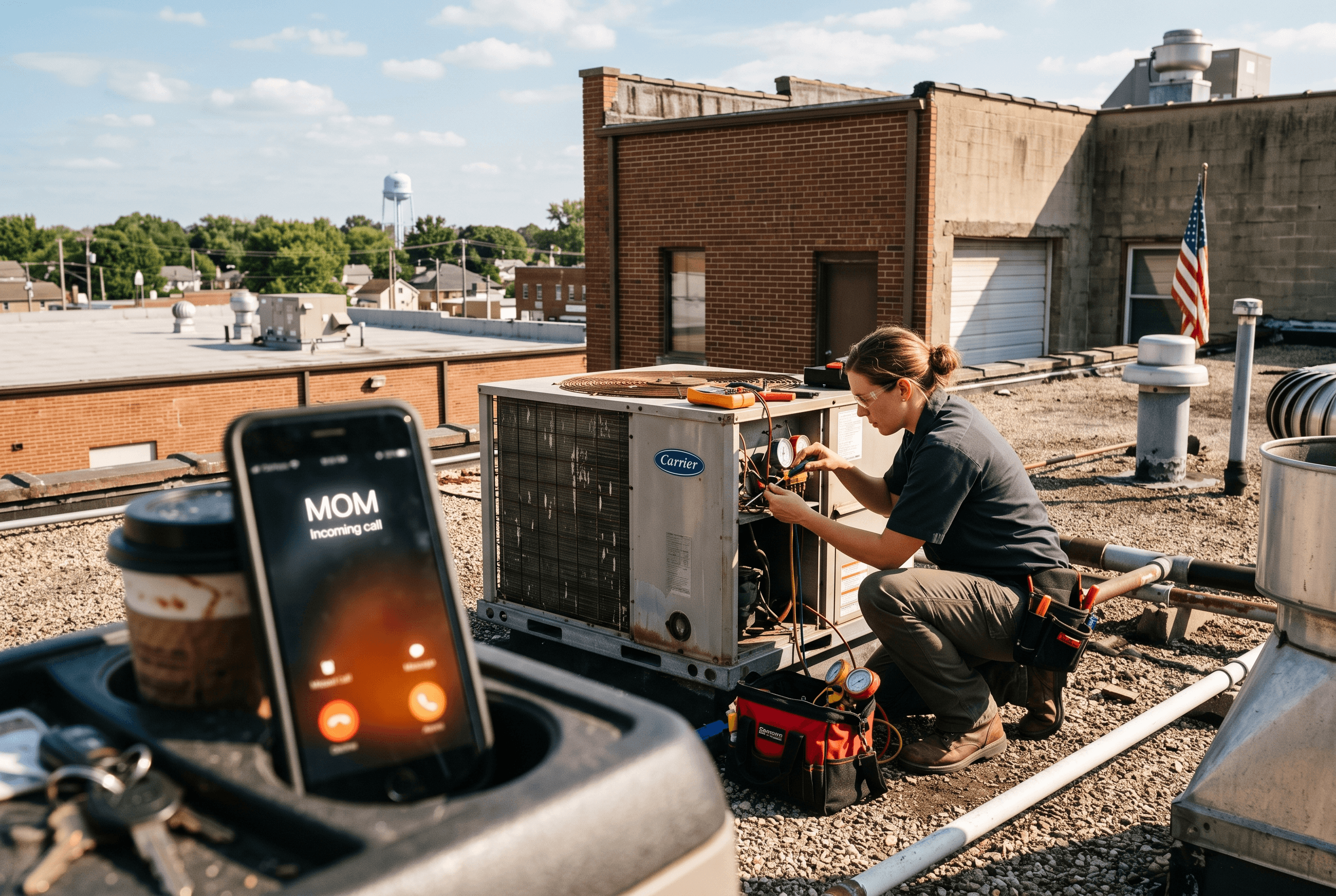
If you run Local Services Ads (the “Google Verified” pay-per-lead ads at the top of search results), a quiet change to how Google bills you takes effect October 1, 2026 — and it can turn a call you never even picked up into a line item on your invoice.
Here’s the short version: starting Oct. 1, Google Local Services Ads will charge for missed calls during your business hours when the caller stays on the line longer than 20 seconds, plus certain follow-up calls between you and that same customer, even when the first call didn’t qualify as a billable lead. Google notified advertisers by email in late August. For Fort Wayne’s home-services trades — HVAC, plumbing, electrical, roofing, garage doors — that lean on LSAs harder than anyone, this is a direct hit to your cost per lead, and the fix is making sure no qualified call rings out unanswered.
- Effective Oct. 1, 2026: missed LSA calls during business hours become billable leads if the caller stays on the line more than 20 seconds.
- Follow-up calls count too: if a first call doesn’t qualify, a later call between you and the same customer can still be charged if it meets Google’s valid-lead criteria.
- There are exceptions: press-a-key phone menus start the 20-second timer only after the keypress, and Google says it will keep safeguards against spam and robocalls.
- Disputes work differently now: Google no longer offers manual lead disputes — an automated system reviews charges and credits invalid leads on its own, usually within 30 days.
- The real fix is answered calls: tighten your business hours, call routing, and after-hours coverage so you stop paying for calls you couldn’t take.
This is not a reason to panic or pull your ads. It is a reason to spend an hour before Oct. 1 checking how your phone actually handles a call at 2 p.m. on a busy Tuesday. Below is what’s changing, what it costs, and a five-step checklist any Fort Wayne shop can run this week. If you want the wider context on how paid channels fit together locally, our Fort Wayne digital marketing playbook puts LSAs in their place alongside SEO, Google Ads, and reviews.
What Exactly Is Changing on October 1, 2026?
Today, a Local Services Ads “call lead” generally has to be answered and meet Google’s valid-lead criteria to be charged. The Oct. 1 change adds two new ways a call can cost you.
According to Search Engine Land’s report on the advertiser email, unanswered calls during your business hours will become billable leads if the caller stays on the line longer than 20 seconds.1 Separately, PPC Land notes that subsequent follow-up calls between the business and the same user will be charged if they meet the valid-lead criteria, even when the first call didn’t qualify.2 Search Engine Roundtable reported the same two-part change from the notification.3
| Situation | Today | Starting Oct. 1, 2026 |
|---|---|---|
| Call rings during business hours, no one answers, caller holds 25 seconds | Generally not charged | Charged as a valid lead |
| Caller hangs up before 20 seconds | Not charged | Not charged |
| First call didn’t qualify, customer calls back and connects | Often not charged | Charged if it meets valid-lead criteria |
| Call outside your listed business hours | Not charged as a business-hours miss | Unchanged — this rule targets business-hours calls |
Google frames the move around responsiveness — Search Engine Land quotes the rationale that Local Services Ads customers “often have immediate needs” and that the policy rewards “businesses that provide excellent responsiveness.” That framing is worth naming honestly: the mechanism doesn’t reward fast answers so much as it penalizes non-answers. In practice, the message to a Fort Wayne owner is simple — a missed call is no longer free.
One important gap: the notice does not spell out exactly when the 20-second timer starts — at first ring, at connection, or at some other point — and PPC Land notes it doesn’t address voicemail scenarios either. We’ll update this post once Google clarifies. This change is a billing tweak layered on top of the larger shift we covered when Local Services Ads moved into Google Ads as pay-per-lead campaigns — same channel, new cost mechanics.
When Will You NOT Be Charged for a Missed Call?
The rule has real limits, and knowing them keeps you from over-reacting. Based on the reporting, you should not be charged in these cases:
- The caller hangs up before 20 seconds. A quick misdial or a caller who bails immediately doesn’t cross the threshold.
- A press-a-key phone menu, where the caller never presses the key. Google says that when your setup requires customers to press a key to route to the right department, the 20-second timer starts only once the customer presses that key. If they hang up at the menu without choosing, the timer never starts.
- Calls Google’s own safeguards catch as spam or robocalls. Google says it will keep protections against robot calls and spam-call abuse — though, as PPC Land points out, it hasn’t published the mechanism, thresholds, or an appeal path for those safeguards yet.
Notice the double edge on the phone-menu exception: an interactive menu can shield you from some charges, but if it buries a real customer in options and they give up, you’ve traded a billing risk for a lost job. For most single-trade Fort Wayne shops, a clean, fast-answered line beats a maze of menus.
What Does This Change Cost a Fort Wayne HVAC or Plumbing Shop?
Google hasn’t published new pricing, and LSA cost per lead varies a lot by trade, season, and how many competitors are bidding in your ZIP codes — so anyone quoting you a single dollar figure is guessing. What we can say plainly: LSA leads in the home-services trades are among the more expensive local leads you can buy, and this change adds a new bucket of them.
In our experience, the pain isn’t one missed call — it’s the pattern. A two-truck HVAC company running LSAs through the summer peak can take dozens of calls a week; if even a handful ring out during a rooftop job and the caller holds past 20 seconds, those now bill like answered leads with none of the revenue. Over a busy month that’s real money leaking out of the same budget you’re trying to stretch. For a sense of what local paid clicks and leads actually run by industry, our Fort Wayne Google Ads benchmarks give honest ranges for the Allen County market.
The uncomfortable takeaway: this change tightens the link between your phone-answer rate and your ad ROI. If you weren’t tracking how many LSA calls you actually answer, Oct. 1 is the deadline to start — and it’s exactly the kind of number our ROI reporting work exists to surface, because a cost-per-lead that quietly includes calls you never took is a cost-per-lead that will mislead you.

Can You Still Dispute a Bad LSA Lead?
This is where a lot of older advice is now wrong, so it’s worth getting right. Google no longer offers the old manual lead-dispute button where you flagged a bad lead and waited for a credit. It’s been replaced by an automated system.
Per Google’s Local Services Help documentation, Google’s models review lead quality at two points: leads judged invalid or low quality when the customer first makes contact aren’t charged at all, and charged leads get “reassessed by our models over time, and may be issued credits automatically if later determined to be low quality.”4 When a credit does apply, Google says it lands on your account balance within 30 days — but “the original lead charge will still appear on your invoice,” so your dashboard math and your invoice won’t always match in the moment.
Two limits matter for local trades. Lead credits aren’t available for health-care verticals, tax specialists, or advertisers in EMEA, and Google no longer credits “job type not serviced” or “geo not serviced” leads. Your leverage now is the Lead Feedback Survey — rating leads honestly is how you signal Google to send better-matched calls and, in some cases, earn a credit. It’s slower and less direct than the old dispute button, which is all the more reason to prevent the charge in the first place rather than chase it after.
5 Ways a Fort Wayne Shop Can Avoid Paying for Calls It Can’t Take
You can’t control Google’s billing rules, but you control almost everything that decides whether a call gets answered. Run this list before Oct. 1:
- Fix your business hours so they’re literally true. This rule targets calls during your listed hours. If your LSA and Google Business Profile hours say you’re open until 6 but the office empties at 4:30, you’ve created a 90-minute window of billable missed calls. Match your listed hours to when a human (or a system) will actually answer.
- Make sure calls route somewhere before they ring out. A call that reaches the shop, rolls to a cell, then rolls to a second cell, and finally dies is now a call you may pay for. Set up simple, fast call forwarding to whoever is on point that day so no LSA call sits ringing past 20 seconds.
- Add an after-hours and overflow answering layer. The single highest-leverage fix is guaranteeing a real answer when you’re on a job or after close. That can be a live answering service or an AI receptionist — see our honest breakdown of what AI phone answering actually costs and, before you trust a bot with first-time callers, our AI answering trust checklist so the tool books the job instead of driving the caller away.
- Set a weekly lead-review cadence. Check your LSA lead dashboard once a week, watch the “charged” versus “credited” columns, and rate every weak lead through the feedback survey. It’s now your main lever to shape lead quality and catch charges the automated system should have credited.
- Watch the first two invoices after Oct. 1. Compare your charged-lead count and cost per lead to your September baseline. If missed-call charges spike, that’s a signal to tighten hours or answering coverage — not to abandon a channel that still delivers ready-to-buy local customers.

What This Means in Allen County and Northeast Indiana
Local Services Ads are built for exactly the businesses that dominate Fort Wayne’s service economy: the HVAC company off Coliseum Boulevard, the plumber covering Allen County and DeKalb County, the roofer working New Haven and Huntertown. These are also the businesses most likely to be on a roof or under a sink when the phone rings — which is precisely the scenario this change bills you for.
That’s the local sting. A Summit City contractor who’s elbow-deep in a repair and lets an LSA call hold for 25 seconds will, as of Oct. 1, get charged for that lead as if they’d booked it. The trades that can’t stop mid-job to answer are the ones with the most exposure — and the ones who benefit most from a reliable after-hours answering layer. Seasonality sharpens it too: a Northeast Indiana furnace shop fielding a January cold-snap rush, or a landscaper slammed in spring, will see the most missed calls exactly when leads are most expensive. Getting your answering coverage right before the next peak isn’t a nice-to-have — it’s now a direct cost control.
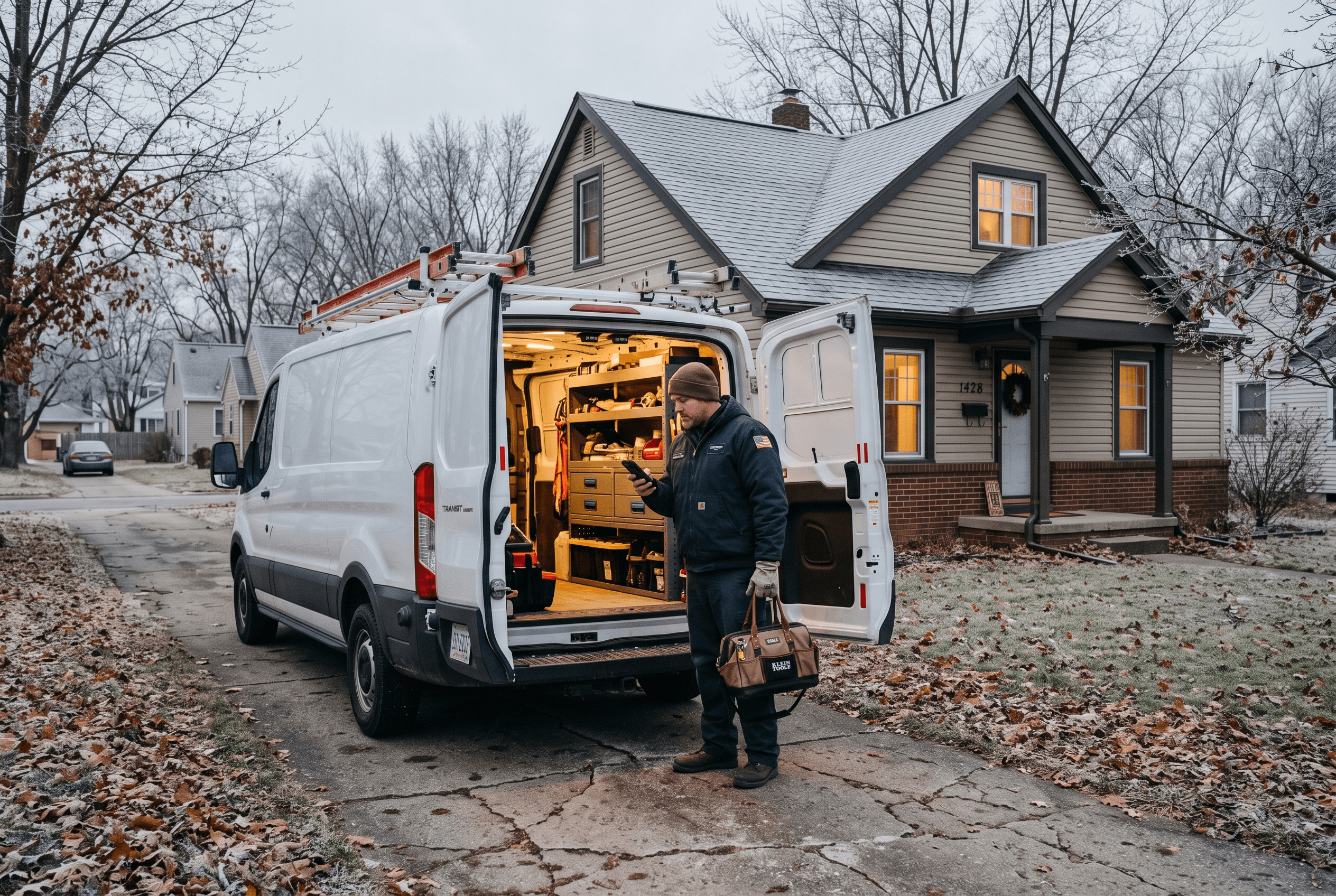
Don’t Let a Missed Call Become a Double Cost
If you’re running Local Services Ads, the safest move before Oct. 1 is a quick audit: are your listed hours honest, does every call route to someone fast, and what happens to a call at your busiest hour? We help Fort Wayne trades run their paid channels and answering systems so ad spend turns into booked jobs, not billed misses. Learn how our advertising management team tightens LSA and Google Ads performance — and pairs it with reporting that shows your true cost per booked job. If your phone is your bottleneck, get in touch and we’ll help you close that gap before the new charges land.
Fort Wayne AI Agency service
Advertising
Targeted paid campaigns across Google, Meta, and more.
Learn moreFrequently Asked Questions
Does Google charge for missed Local Services Ads calls?
Yes. Starting October 1, 2026, Google Local Services Ads will charge for missed calls during your listed business hours if the caller stays on the line more than 20 seconds, plus certain qualifying follow-up calls — even if the first call didn’t count as a billable lead. Calls where the caller hangs up before 20 seconds are not charged.
When does the 20-second timer start?
Google’s advertiser notice doesn’t clearly say whether the timer begins at first ring, at connection, or at another point, and it doesn’t address voicemail. The one detail Google did give is for press-a-key phone menus: there, the 20-second timer starts only after the customer presses a key to route the call. We’ll update this post if Google clarifies the rest.
Can I still dispute a Local Services Ads lead in 2026?
Not through the old manual dispute button — Google retired it. An automated system now reviews leads and credits invalid or low-quality ones on its own, usually within 30 days, though the original charge still shows on your invoice. Credits aren’t available for some verticals, and rating leads through the Lead Feedback Survey is your main way to influence quality.
Will this change affect my Fort Wayne business specifically?
It affects any business running Local Services Ads, anywhere the format is offered — so a Fort Wayne, Allen County, or Northeast Indiana home-services company running LSAs is squarely in scope. The businesses most exposed are the trades that are often out on a job when the phone rings, which is why after-hours and overflow answering coverage matters most locally.
What’s the fastest way to avoid the new charges?
Guarantee that qualified calls get answered. Match your listed hours to when someone can actually pick up, set up fast call routing so nothing rings out, and add an after-hours or overflow answering layer — a live service or an AI receptionist — so no LSA call holds past 20 seconds unanswered.
Sources & Further Reading
- Search Engine Land: searchengineland.com/google-local-services-ads-will-charge-for-some-missed-calls-starting-oct-1-485798 · Google Local Services Ads will charge for some missed calls starting Oct. 1 (August 25, 2026)
- PPC Land: ppc.land/google-charges-local-services-advertisers-for-missed-calls-over-20-seconds · Google charges Local Services advertisers for missed calls over 20 seconds (August 25, 2026)
- Search Engine Roundtable: seroundtable.com/google-lsa-missed-subsequent-calls-41940.html · Google Local Service Ads To Charge For Missed & Subsequent Calls (August 25, 2026)
- Google Local Services Help: support.google.com/localservices/answer/15100654 · About Automated Local Services Ads lead credits (August 26, 2026)
Put this to work in your business
Want help with this in your business?
Tell us what you're working on — a real person in Fort Wayne replies within one business day.