Is Google Ads Still Worth It for Fort Wayne Businesses in 2026?
Google clicks cost 15% more than a year ago and returns are falling. An honest look at whether ads still pay off for Fort Wayne businesses — and what to fix first.
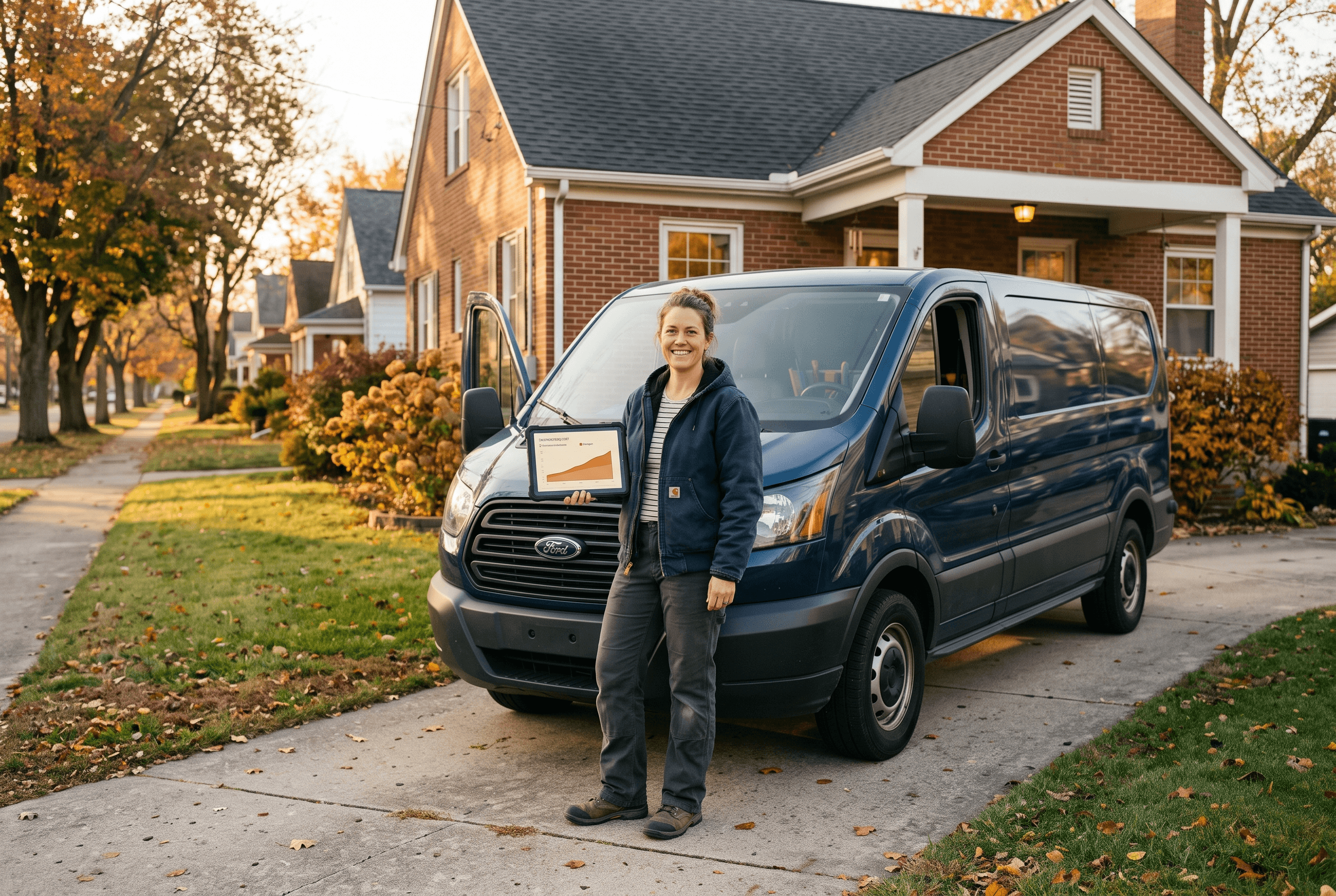
If you run Google Ads for a Fort Wayne business, you have probably felt it before you read about it: clicks cost more this year, and each dollar seems to bring back less. In July, that feeling got a number attached to it. A major 2026 benchmark study found that Google Ads cost per click rose 15% year over year while return on ad spend fell sharply — and the story made it all the way to the small-business press.1
Here’s the part most of the coverage skips: that headline data comes from European e-commerce advertisers, not U.S. local-service businesses. The cost pressure is real and the direction of travel matters for everyone buying clicks, but a Fort Wayne HVAC company or dental office should not read "ROAS down 46%" as a description of its own account. The honest answer to "is Google Ads still worth it?" is more nuanced — and more useful — than the scare headline.
This post walks through what the new data actually says, what U.S. clicks really cost for local industries, and a plain keep-it, fix-it, or shift-it framework for deciding what to do with your own budget. It’s one piece of the bigger picture we cover in our Fort Wayne digital marketing playbook, which is worth reading alongside this if you’re rethinking where your marketing dollars go.
Key takeaways:
- A 2026 Channable benchmark of 10,000+ European e-commerce advertisers found Google Ads clicks up 15% year over year, with Performance Max return on ad spend down 46%.
- That data is European e-commerce — not U.S. local service. Treat it as a warning about direction, not a measurement of your account.
- U.S. data tells a more mixed story: average cost per click hit $5.42, but average cost per lead actually declined for the first time in five years.
- Rising click costs punish small budgets hardest, because a local advertiser has less room to absorb waste than a national brand.
- The right response is rarely "quit ads" — it’s usually fix tracking and account fundamentals first, then rebalance some budget toward organic local visibility that keeps working after the ads stop.
What Just Happened to Google Ads Costs?
The numbers making the rounds come from Channable, an e-commerce feed-management platform that analyzed €1.38 billion in verified Google Ads spend across more than 10,000 European e-commerce advertisers between June 2025 and June 2026. According to PPC Land’s analysis of the Channable data, average cost per click rose 15% year over year, while return on ad spend contracted 46% on Performance Max campaigns and 43% on Standard Shopping campaigns.1 Cost per acquisition climbed too — up €1.44 on Performance Max and €1.94 on Shopping.
Trade coverage at ChannelX highlighted the same core finding,2 and by July 12 the story had reached the mainstream small-business audience through Gene Marks’s Forbes roundup, where Marks noted that a 15% annual increase far outpaces inflation and suggested small businesses diversify their marketing channels rather than lean entirely on Google.4
Now the caveat that makes this useful instead of alarming. Channable’s dataset is European e-commerce: online retailers selling products through Shopping and Performance Max campaigns across 17+ countries. It is not a measurement of what a plumber in Allen County pays for a "water heater repair" click, and the dramatic ROAS decline partly reflects dynamics specific to European retail auctions — including a wave of new advertisers entering previously cheap markets. Hungary saw click costs jump 42%, roughly double the European average. Nothing like that is happening in Northeast Indiana.
So the right reading is: the world’s biggest ad platform is charging more per click and returning less per dollar for a very large, well-measured group of advertisers, and the same pressure — more competition, more automation, higher prices — is present in U.S. local markets too. What it means for your budget depends on numbers closer to home.
Why Did My Cost Per Click Go Up?
Channable’s analysis points to three structural forces behind the increase, and two of them apply directly to Fort Wayne advertisers.
Auction consolidation through Performance Max. Google’s automated Performance Max campaign type pushes ads across Search, Display, YouTube, Discover, Gmail, and Maps from a single budget. That consolidation puts more advertisers into more auctions automatically, which raises competition — and prices — even when nobody deliberately raised a bid. If you’ve noticed your costs creeping up without changing anything, this is a big part of why.
More advertisers entering the auction. In Europe that meant new advertisers flooding into low-cost countries. The local version is familiar to anyone bidding on home-services keywords in Allen County: every year a few more competitors — including national lead-generation companies — enter the same auctions for "furnace repair fort wayne," and everyone’s clicks get more expensive.
A widening gap between well-run and poorly run accounts. Channable’s own takeaway was that advertisers absorbing the cost increases worst share a common flaw: they optimize campaigns while neglecting the underlying data — product feeds in e-commerce, but the local equivalent is just as real. Loose keyword match types, no negative keyword list, weak landing pages, and broken conversion tracking all force you to pay for visibility that a well-structured account earns at lower cost. Channable’s chief product officer made the point that a 15% cost increase is painful if you’re bidding the same way you did last year, and manageable when your underlying data and campaign structure are doing the work.1
That third force is the one you control. In our experience auditing local accounts, the difference between a well-maintained campaign and a neglected one is frequently larger than any single year’s market-wide cost increase.
What Do Clicks Actually Cost for U.S. Local Businesses?
For U.S. numbers, the most useful current dataset is WordStream’s 2026 Google Ads benchmarks, which analyzed 13,474 U.S. search advertising campaigns across 23 industries from April 2025 through March 2026.3 The average cost per click landed at $5.42 — but averages hide the spread that matters for local budgets:
| Industry | Average CPC (2026, U.S.) |
|---|---|
| Attorneys & Legal Services | $9.87 |
| Home & Home Improvement | $8.33 |
| Dentists & Dental Services | $8.00 |
| Physicians & Surgeons | $4.76 |
| Restaurants & Food | $2.05 |
Notice which industries sit at the top: home services and dental — two of the biggest advertising categories in the Fort Wayne market. If you run an HVAC, roofing, plumbing, or dental practice here, you’re buying some of the most expensive clicks in local advertising.
But here’s the finding that should stop you from panic-quitting: the same WordStream report found that average cost per lead in search advertising declined for the first time in five years, to $66.69.3 Clicks cost more, yet the cost of an actual lead went down — which means advertisers, on average, got better at turning expensive clicks into inquiries. Costs rising and returns collapsing are not the same thing in the U.S. search data, and that distinction is the difference between "fix your account" and "abandon the channel."
We keep a deeper breakdown of these numbers, including what they mean for typical Fort Wayne budgets, in our guide to what Fort Wayne businesses actually pay per click.

So Is Google Ads Still Worth It in 2026?
For most Fort Wayne businesses the honest answer is: yes, if your account is run well and your economics support the click prices — and you should be able to check that in an afternoon. Here’s the decision framework we use.
Keep it if the math still works. Google Ads is worth it when the value of a customer comfortably exceeds what you pay to acquire one. At Home & Home Improvement’s $8.33 average click, a $1,500 monthly budget buys roughly 180 clicks. At WordStream’s 8.18% average conversion rate, that’s in the neighborhood of 14-15 leads — around $100 per lead.3 For an HVAC company whose average ticket runs well into four figures, that math works even after the price increases. For a business selling a $40 service with no repeat visits, it likely never worked.
Fix it if you can’t answer the math question. If you don’t know your cost per lead — not cost per click, cost per lead — the problem isn’t Google’s pricing, it’s measurement. Before making any keep-or-quit decision, get conversion tracking working, connect calls and form fills to campaigns, and review the marketing metrics every Fort Wayne owner should track. Rising click costs make a leaky account more expensive every year; 2026 prices have simply made sloppy setups too costly to ignore.
Shift some budget if you’re paying for clicks that organic presence could earn. If a meaningful share of your ad spend goes to branded searches or "near me" queries where you could rank organically, the rising cost of clicks strengthens the case for investing in the assets you own — your Google Business Profile, your reviews, your local rankings. Those channels keep producing after the monthly ad budget stops.
What we don’t recommend is the reaction the scare headlines invite: pausing everything overnight. Ads are often the fastest lever a local business has, and an account with years of conversion history is an asset. Turn it off entirely and you lose both the leads and the data.

What Should You Do If Your Ads Stopped Working?
If your results have genuinely slipped this year, work through the causes in this order before adding budget:
- Verify tracking first. A "performance drop" is sometimes a measurement drop — broken conversion tags, missed call tracking, or forms that changed. Confirm the data before acting on it.
- Audit search terms and negatives. Automated match types and Performance Max cast wider nets every year. Pull the search terms report and add negatives for everything irrelevant you’re paying for.
- Check where automation is spending. If Performance Max is allocating your budget to Display or YouTube placements that don’t produce calls, tighten the campaign structure or move budget back to standard Search where intent is highest.
- Look at your landing pages. A 15% click-cost increase can be fully offset by a modest conversion-rate improvement. Faster pages, clearer calls to action, and mobile-first forms are usually cheaper than more clicks.
- Compare against your benchmarks, not your memory. "Worse than last summer" needs numbers. Industry CPC and conversion benchmarks tell you whether you have an account problem or a market problem.
Most accounts we review have at least two of these five issues, and fixing them changes the worth-it math more than any market trend does.
What This Means for a Fort Wayne Ad Budget
A national brand can absorb a 15% click-cost increase by trimming somewhere else. A Fort Wayne contractor spending $1,000-$2,000 a month cannot — every wasted click is a bigger share of the budget, which is why account hygiene matters more here, not less.
It’s also why the smartest local response to expensive clicks is building the visibility you don’t rent. Strengthening your presence in the Google Map Pack puts you in front of the same "near me" searchers without a per-click charge. Keeping your Google Business Profile verified, accurate, and active matters more than ever. And as more people ask ChatGPT and Google’s AI features for recommendations instead of clicking ads, answer engine optimization is becoming the organic channel that compounds while ad prices climb. Gene Marks’s advice to small businesses in his Forbes column was to diversify beyond Google’s paid channel — for a local business, these owned channels are exactly what that diversification looks like.4
The goal isn’t ads or organic. It’s ads that carry the load they’re uniquely good at — immediate, controllable lead flow — sitting on top of a local presence that gets stronger every month.
Get an Honest Answer on Your Own Numbers
If you’re not sure whether your Google Ads budget is still earning its keep, we’ll tell you straight — including if the answer is "your account is fine, don’t pay anyone to redo it." Our advertising management team audits Fort Wayne accounts against current industry benchmarks: what you’re paying per click and per lead, where automation is wasting spend, and whether your budget is sized right for your market. And if the numbers say some of that budget belongs in organic visibility instead, our digital marketing team builds the plan for that side too. One conversation, real numbers, no scare tactics — get in touch when you’re ready for a straight answer.
Fort Wayne AI Agency service
Advertising
Targeted paid campaigns across Google, Meta, and more.
Learn moreFrequently Asked Questions
Is Google Ads still worth it for a small business in 2026?
Usually yes, if a customer is worth meaningfully more than your cost to acquire one and your account is actively managed. U.S. benchmark data shows clicks got more expensive in 2026, but average cost per lead actually declined — well-run accounts are still producing affordable leads. The businesses that should reconsider are those with low ticket values, no conversion tracking, or accounts nobody has touched in months.
Why is my Google Ads cost per click going up?
Three forces are pushing clicks higher: Google’s Performance Max automation enters more advertisers into more auctions automatically, more competitors keep joining local auctions, and loosely managed accounts pay a growing penalty versus optimized ones. A 2026 Channable benchmark measured the result at 15% year over year across 10,000+ European advertisers, and U.S. advertisers are feeling the same upward pressure.
How much should a Fort Wayne small business spend on Google Ads?
Work backward from click prices in your industry rather than starting from a round number. At home-services click prices around $8, a budget under about $1,000 a month often buys too few clicks to generate steady leads, while service businesses with cheaper clicks can start lower. The budget question matters less than the measurement question: know your cost per lead, and size the budget the math supports.
Should I stop running Google Ads if my return dropped?
Not as a first move. Confirm your conversion tracking is actually recording leads, audit your search terms for wasted spend, and check where automated campaigns are placing your ads — a large share of "ads stopped working" cases are account or measurement problems, not market problems. If the math still fails after the account is genuinely clean, then shift budget toward organic local visibility rather than simply going dark.
Sources & Further Reading
- PPC Land: ppc.land/channable-data-shows-advertisers-lose-46-roas-as-google-clicks-cost-more · Channable data shows advertisers lose 46% ROAS as Google clicks cost more (July 12, 2026)
- ChannelX: channelx.world/2026/07/cost-of-clicks-rises-15-year-over-year-and-roas-drops-46 · Cost of clicks rises 15% year-over-year and ROAS drops 46% (July 2, 2026)
- WordStream: wordstream.com/blog/2026-google-ads-benchmarks · Google Ads Benchmarks 2026: Competitive Data & Insights for Every Industry (2026)
- Forbes: forbes.com/sites/quickerbettertech/2026/07/12/small-business-technology-news-roundup-microsoft-makes-a-major-ai-u-turn · Small Business Technology News Roundup: Microsoft Makes A Major AI U-Turn (Gene Marks, July 12, 2026)
Put this to work in your business
Want help with this in your business?
Tell us what you're working on — a real person in Fort Wayne replies within one business day.