Link Building in the AI Era: What to Keep and What to Cut (2027)
Still being sold “link packages”? Here’s the honest keep-or-cut call for 2027 — which off-page tactics still earn authority and AI citations, and which to stop paying for.

If you own a business in Fort Wayne, you have almost certainly gotten the email: “100 backlinks for $99,” or a monthly “link package” that promises to rocket you up Google. For years the honest answer to that kind of link building was don’t buy those. In the AI-search era, that advice hasn’t changed — but the reasons behind it, and what you should spend that money on instead, have shifted in an important way.
Here’s the short version. Links still matter. Not as trophies, and not as something you buy by the dozen, but because the same earned authority that helps you rank in Google also helps AI systems — ChatGPT, Perplexity, Google’s AI Overviews — discover your business, trust it, and name it when a customer asks for a recommendation. Search Engine Journal’s 2027 link-building outlook frames the year ahead as a keep-or-cut decision: retire the tactics that never really worked, and double down on the ones that now do double duty.1
This is a buyer’s guide. We’ll be plain about what to stop paying for and what to put that budget toward — and how a Northeast Indiana business earns real authority close to home.
Key takeaways:
- Links still count in AI search — not for their own sake, but because earned authority drives both rankings and whether AI tools cite and recommend you.
- Cut bulk link packages, private blog networks (PBNs), paid links, and mass low-quality directory submissions. They carry real risk and little upside.
- Keep and expand original data, earned coverage from relevant publications, expert commentary, and brand mentions — linked or not.
- Backlinko reports that 84% of AI citations come from earned media — third-party sources, not your own website.4
- Brands appear in AI answers about 6.5× more often through third-party signals than through their own content, per AirOps data cited by Backlinko.2
- A Fort Wayne business can earn authority locally: WANE and Input Fort Wayne coverage, Greater Fort Wayne Inc. and Chamber memberships, and local data stories all feed both the Map Pack and AI recommendations.
Do backlinks still matter for AI search?
Yes — but it helps to understand why, because the “why” tells you where to spend. Search engines use links to discover pages and to judge how relevant and trustworthy those pages are. That job hasn’t disappeared just because an AI answer now sits on top of the results. If anything, the overlap between classic ranking and AI visibility is what makes earned links worth the effort.
Consider the clearest data point we have. According to an Ahrefs study from March 2026, cited by Search Engine Journal, 37.1% of URLs cited in AI Overviews also ranked in the top 10 organic results for the same query.1 Read that carefully: it is a measure of how often AI-cited pages also rank well — not a promise that a backlink buys you a citation. Search Engine Journal is blunt about the limit: a backlink does not guarantee a citation. What it tells a Fort Wayne owner is that the fundamentals of being findable and credible still carry over into AI answers. The authority you build doesn’t live in two separate buckets anymore.
That’s the thread running through this whole topic. If you already understand how AI tools choose which businesses to name — and if not, our explainer on what answer engine optimization actually is is the place to start — then link building is simply one of the inputs that feeds it. Our Fort Wayne digital marketing playbook lays out where off-page work sits among all your channels; here we zoom in on link building itself. The question isn’t whether to invest in off-page authority. It’s which kinds, and that’s where most local marketing budgets go wrong.
What link-building tactics should you cut?
Let’s start with the money you should stop spending, because cutting waste is the fastest win. In our experience advising Northeast Indiana businesses, these are the tactics to retire:
- Bulk link packages — the “100 backlinks for $99” offers. They’re almost always low-quality automated placements that search engines already discount, and at worst they invite a manual penalty.
- Private blog networks (PBNs) — networks of sites built only to pass link authority. Google treats these as link schemes, and buying into one puts your rankings at the mercy of a network you don’t control.
- Paid links that pass authority — straightforwardly against Google’s guidelines. A paid placement can be fine for exposure, but not as a disguised ranking shortcut.
- Mass directory submissions — blasting your business into hundreds of low-quality directories. A handful of real, relevant local listings matter; the other 400 do nothing and can create inconsistent-citation headaches.
The honest framing is this: none of these build the kind of authority an AI system reads as trust. Backlinko’s analysis of brand mentions explains that search engines increasingly evaluate a brand by “what the wider web says about you” — who mentions you, in what context, and how consistently.3 A cheap link farm says nothing credible about you. A write-up in a publication your customers actually read says a great deal. The dollars you reclaim from the cut list are exactly what funds the keep list below.

What link-building tactics should you keep (or shift budget toward)?
Here’s where off-page work earns its keep in 2027. The common thread is third-party validation — other credible people and sites vouching for you — because that is precisely what both Google and large language models lean on.
How much does third-party presence matter? Backlinko’s digital-PR analysis reports that 84% of AI citations come from earned media — editorial coverage, reviews, and forums rather than your own pages.4 And per AirOps data cited in Backlinko’s PR-and-SEO guide, brands are about 6.5× more likely to appear in AI answers through third-party signals than through their own content.2 The same guide notes that press-release citations inside LLMs grew roughly fivefold between July and December 2025, according to Muck Rack data. You cannot buy your way onto that list — you earn your way on. Here’s how:
- Publish original, local data. A simple “what customers in Allen County actually pay for X” survey or a seasonal trend you can document is linkable and quotable. Original research is the single most reliable way to get referenced.
- Earn coverage from relevant publications. One genuine mention in a Fort Wayne outlet or a respected trade publication beats dozens of directory links.
- Offer expert commentary. Backlinko’s digital-PR research found that pages featuring expert quotes earn 4.1 citations in ChatGPT on average, versus 2.4 for pages without them.4 Being the quoted expert compounds.
- Earn brand mentions, linked or not. Backlinko points to a SparkToro study — showing Google still handles just under 74% of searches versus under 3% for ChatGPT — as an example of data that gets referenced across the web.3 Even unlinked mentions help AI systems associate your name with your category.
- Build legitimate third-party presence. Review profiles and community platforms carry weight. Backlinko cites research that brands with even a minimal Trustpilot profile — as few as 1 to 13 reviews — jump to a 53.5% citation rate, versus about 1% for brands with no profile at all.4 LinkedIn, in one study, was the second-most-cited domain across ChatGPT, AI Mode, and Perplexity.
None of this is a stunt. It’s the slow, compounding work of becoming the business other people cite — and it pairs directly with knowing where AI actually finds who to cite, from Wikipedia to Reddit to podcasts. Once you’ve created a linkable asset, the next job is getting it seen, which is where a content distribution system that compounds pays off.
Keep vs. cut: where your off-page budget should go
| Tactic | Verdict | Why |
|---|---|---|
| Bulk “100 links for $99” packages | Cut | Low-quality, discounted by search engines, penalty risk |
| Private blog networks (PBNs) | Cut | A link scheme; authority you don’t control |
| Paid links that pass authority | Cut | Against Google guidelines; no durable trust signal |
| Mass low-quality directory blasts | Cut | Noise; can cause citation inconsistencies |
| Original local data & useful tools | Keep | Most reliable way to earn real citations |
| Earned coverage in relevant/local press | Keep | Real authority Google and LLMs both read |
| Expert commentary & quotes | Keep | Pages with expert quotes earn more AI citations |
| Brand mentions (linked or unlinked) | Keep | Builds the “what the web says about you” signal |
| Review & community profiles | Keep | Even minimal profiles lift AI citation rates |

How does a Fort Wayne business earn real authority locally?
You don’t need a national PR agency to do any of this — you need to be genuinely present in Northeast Indiana, and then make sure the web records it. The local playbook is refreshingly concrete.
Start with coverage. When WANE 15 or Input Fort Wayne writes about a local business, that’s an earned mention on a trusted regional domain — exactly the kind of third-party signal that feeds both search and AI. You earn it by doing something worth covering: a hiring milestone, a community project, a genuinely useful piece of local data. Memberships help too. Greater Fort Wayne Inc. and your local Chamber list members and partners, and those listing pages are legitimate, relevant links — a world apart from a mass directory blast.
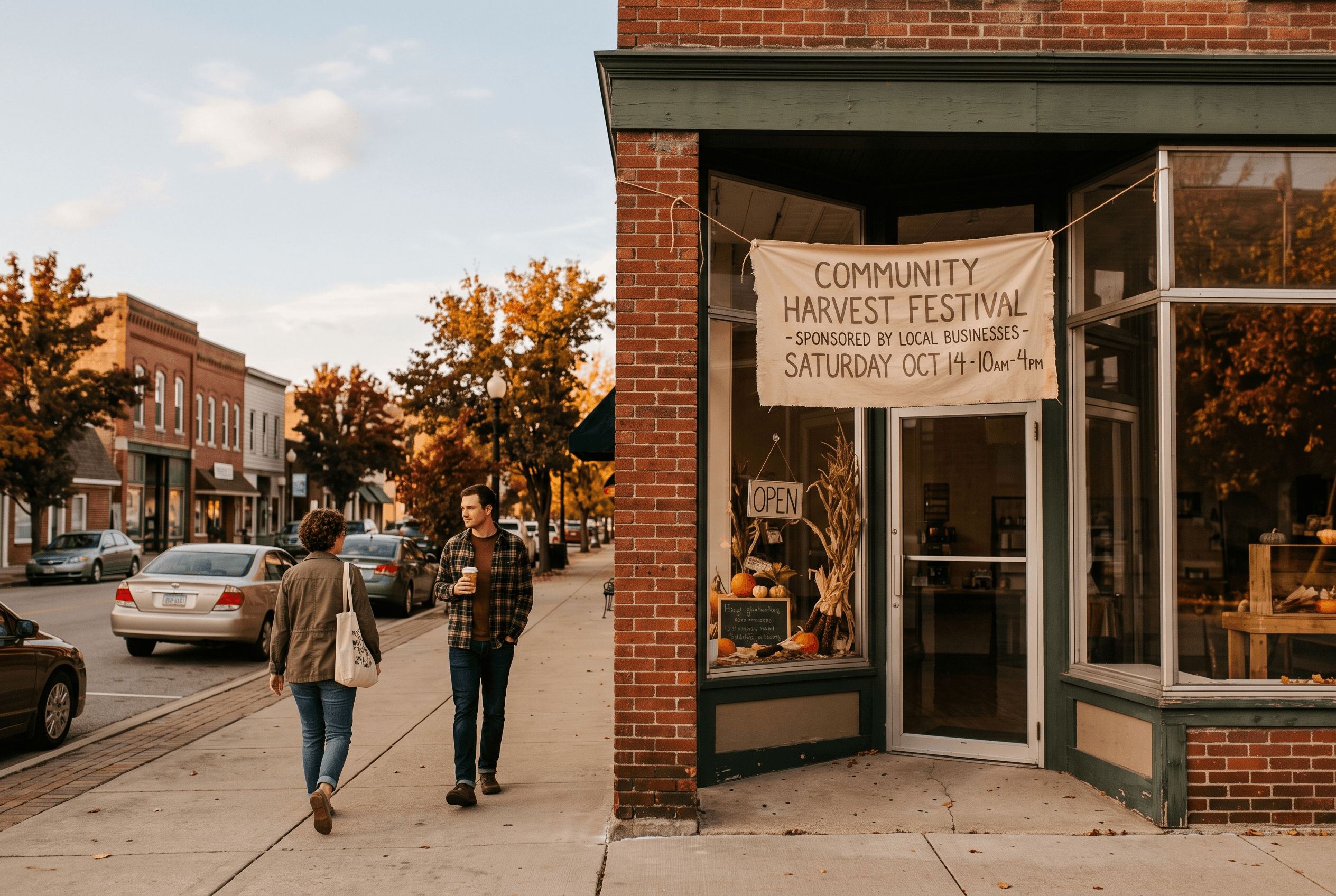
Then there’s your own backyard data. A Fort Wayne HVAC company that publishes honest seasonal cost ranges for Allen County, or a dental office that explains local insurance realities, creates something reporters and AI tools can cite. Sponsorship and local event pages work the same way — a sponsor logo linked from a well-known Fort Wayne nonprofit or festival page is earned, relevant, and real. All of these signals do double duty: they strengthen your local SEO and Google Map Pack presence across Allen County, and they give ChatGPT and Google’s AI more reasons to name you. If you’ve ever wondered why AI keeps recommending a competitor instead of you, thin local authority is often the quiet reason — and it’s fixable.
Getting the keep-or-cut call right
If you take one thing from this, make it this: stop paying for links as a product, and start investing in authority as a reputation. The cut list frees up budget; the keep list builds something that compounds and that AI systems actually trust.
That’s deliberate, ongoing work — earning coverage, publishing data, landing expert mentions, and tying it all back to how AI answers get built. It’s exactly the kind of off-page strategy our SEO and answer engine optimization services are built around, with the Fort Wayne context baked in. If you’re not sure which of your current link spend is helping and which is just noise, that’s a good first conversation to have — no package required.
Fort Wayne AI Agency service
SEO Services
Dominate traditional search and AI-powered answer engines.
Learn moreFrequently Asked Questions
Does link building still matter for SEO and AI search in 2027?
Yes. Search engines still use links to discover pages and judge relevance and trust, and that authority carries into AI answers. Search Engine Journal cites an Ahrefs study finding 37.1% of URLs cited in AI Overviews also ranked in the top 10 organic results for the same query — though a backlink never guarantees a citation.
Should I buy backlinks or link-building packages?
No. Bulk link packages, paid links that pass authority, and private blog networks are link schemes that search engines discount and can penalize. They also build none of the credible, third-party trust that AI systems read. Spend that budget on earning real coverage and mentions instead.
What are brand mentions, and do they help if there’s no link?
A brand mention is any reference to your business by a third party — in an article, a forum, a podcast, or a review. Even unlinked mentions help, because search engines and AI tools weigh “what the wider web says about you.” Backlinko reports that 84% of AI citations come from earned media rather than a brand’s own pages.
How can a small Fort Wayne business earn authority without a big budget?
Focus locally. Earn coverage from outlets like WANE 15 or Input Fort Wayne, join Greater Fort Wayne Inc. or your Chamber, publish honest Allen County data, and sponsor local events that link back to you. These earned, relevant signals strengthen both your Map Pack ranking and your odds of being recommended by AI.
Does digital PR really affect whether AI recommends my business?
It does. Backlinko’s research found pages with expert quotes earn 4.1 ChatGPT citations on average versus 2.4 without, and that brands appear in AI answers far more often through third-party signals than their own content. Earned media and expert commentary are among the strongest levers for AI visibility.
Sources & Further Reading
- Search Engine Journal: searchenginejournal.com/link-building-strategies-for-2027-what-to-keep-and-cut/592119 · Link Building Strategies for 2027: What to Keep and Cut (October 8, 2026)
- Backlinko: backlinko.com/pr-and-seo · PR and SEO: How to Build More Authority Together (5 Steps)
- Backlinko: backlinko.com/brand-mentions · Brand Mentions in 2026: How to Earn and Track Them Across the Web
- Backlinko: backlinko.com/digital-pr-strategies · 6 Digital PR Strategies to Boost AI Visibility
Put this to work in your business
Want help with this in your business?
Tell us what you're working on — a real person in Fort Wayne replies within one business day.