Zero-Click Search: How Fort Wayne Customers Still Find You
About 68% of Google searches now end without a click. Here’s why that’s not a death sentence for Fort Wayne businesses — and where local search still wins.
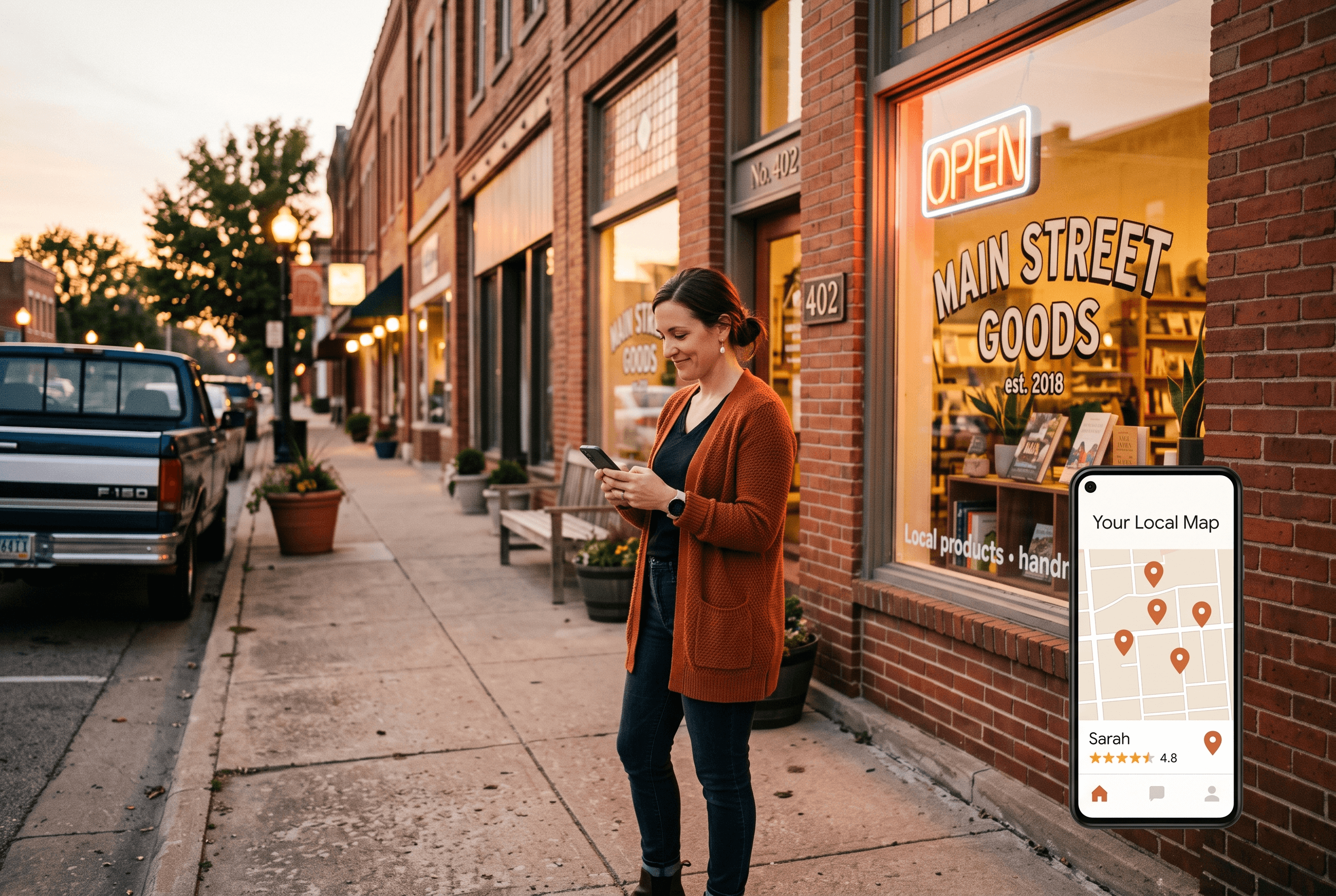
As of early 2026, about 68% of U.S. Google searches end without a click to any website — a zero-click search — but the searches that still send clicks are disproportionately branded searches and local, high-intent queries, so a Fort Wayne business wins less by chasing blog traffic and more by being the named, bookable, well-reviewed local answer.1
That first sentence is the whole story, and it’s worth sitting with. If you own an HVAC company on the north side, a dental practice near Dupont Road, or a restaurant downtown, you’ve probably heard some version of “SEO is dead” this year. The number behind the headline is real. What the headline leaves out is which searches stopped sending clicks — and which didn’t. That distinction is where the practical plan for a Fort Wayne small business lives, and it’s the same distinction we build our Fort Wayne digital marketing playbook around: put your effort where the clicks (and calls) still happen.
Key takeaways:
- About 68% of U.S. Google searches now end without a click to any website — up from roughly 45% a decade ago.
- The drop is driven mostly by AI Overviews and answers on the results page itself. Chatbot-style AI Mode was only about 0.34% of searches in the study window.
- Branded searches, local business queries, and high-intent “ready to buy” searches remain the most click-resilient categories.
- For a Fort Wayne business, the winning moves are a complete Google Business Profile, steady reviews, an easy way to book or call, and a name people search for directly.
- Measure calls, bookings, and branded-search growth — not raw website traffic.
How Many Google Searches Actually Send a Click in 2026?
According to SparkToro’s analysis of Similarweb clickstream data covering U.S. desktop and mobile searches from January through April 2026, 68.01% of Google searches ended without a click — to an organic result, a paid ad, or even a Google-owned property.1 That’s up from 60.45% in 2024, and roughly 45% back in 2016. The jump from 2024 to 2026 is the fastest acceleration SparkToro has measured in a decade.
| Year | U.S. Google searches ending without a click |
|---|---|
| 2016 | ~45% |
| 2019 | 49% |
| 2024 | 60.45% |
| Early 2026 | 68.01% |
Two details matter before you panic. First, the main driver isn’t ChatGPT-style chatbots — it’s Google answering questions on its own results page. AI Overviews now appear on more than 20% of searches and cut click-through rates by nearly 60% when they show up, while Google’s conversational AI Mode accounted for only about 0.34% of searches in the study window.1 The click loss is happening inside Google, today, on searches your customers are already running.
Second, the methodology has a known blind spot: the panel excludes Google’s mobile search app, where zero-click features are even more aggressive — meaning the real number is likely somewhat higher, not lower.1 Searches that produced at least one click fell 9.51 percentage points between 2024 and 2026, a 22.9% decline, while the share of searches that just led to another Google search rose 7.2 points.1
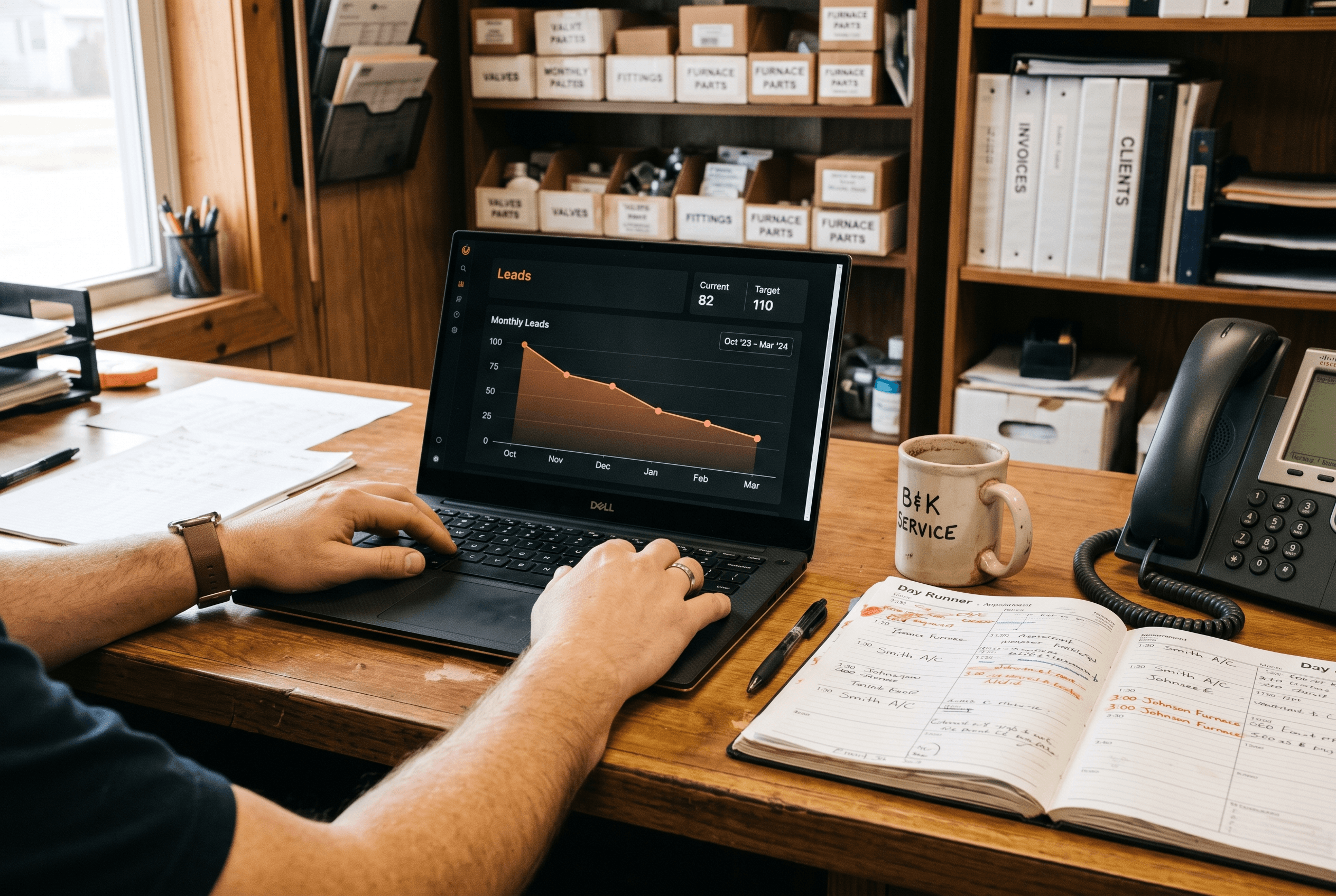
Is Zero-Click Search Bad News for Your Fort Wayne Business?
For most local businesses, no — and this is the part the doom headlines skip. SparkToro’s own analysis identifies the query categories that still reliably send clicks: branded searches (someone typing your business name), local business queries (“furnace repair near me,” “dentist Fort Wayne”), and high-intent transactional searches where the person is ready to act.1 Search Engine Land’s coverage of the study highlights the same resilient categories.3
Those are precisely the searches that matter to a service business in Allen County. The searches evaporating are informational ones — “how often should I change my furnace filter,” “what causes tooth sensitivity” — the kind that used to land on blog posts. Google now answers those on the page. What it can’t answer on the page is who should come fix it, because that requires a real local business with real reviews, real hours, and a real phone number.
There’s a reinforcing data point in SparkToro’s companion piece: branded terms make up roughly 44% of all Google searches.2 Nearly half of Google’s volume is people looking for a specific name. If your business is the name people in Fort Wayne type, the zero-click era barely touches you. If you’re invisible until someone scrolls a results page, it hits hard. That’s also why showing up in the Google Map Pack — which sits above traditional results for nearly every local query — matters more now than it did five years ago.
What Still Works in a Zero-Click Search World?
SparkToro’s companion study, When Google Stops Sending Clicks, What Still Works?, draws on research by Cyrus Shepard analyzing 400+ websites to identify what separates sites still winning clicks from those losing them.2 The winners share five characteristics: they sell actual products or services (not just information), own proprietary assets, keep a tight niche focus, carry a recognizable brand, and — most tellingly — let visitors complete a task: book, buy, calculate, reserve. In that research, 84% of winning sites let users complete tasks, versus only 50% of losing sites, and sites with four or five of these traits won roughly 68–70% of available clicks. Sites with only one won about 15% of the time.
Read that list again as a Fort Wayne business owner and notice something: you already have most of it. You sell a real service. You have a real brand, even if it’s only known in Allen County — that’s the niche focus working for you. The gap for most local businesses is the last item: can someone who finds you actually book an appointment, request a quote, or call in one tap?
SparkToro’s name for the strategic shift is Zero Click Marketing — showing up where your audience already pays attention and building a brand that people (and AI systems) seek out by name, instead of counting on website visits.2 For a national publisher, that’s a wrenching change. For a local service business, it’s honestly close to what good local marketing always was: be known, be findable by name, be easy to hire. This is also the foundation of answer engine optimization — structuring your presence so AI systems cite you as the answer instead of a generic summary.
What Should a Fort Wayne Owner Do This Month?
Here’s the checklist we’d put in front of any local owner, in priority order. None of it requires a big budget — it requires consistency.
- Finish your Google Business Profile. Hours, services, service area, photos, Q&A, booking link. For most local searches, your profile is your homepage now, because the decision happens on the results page.
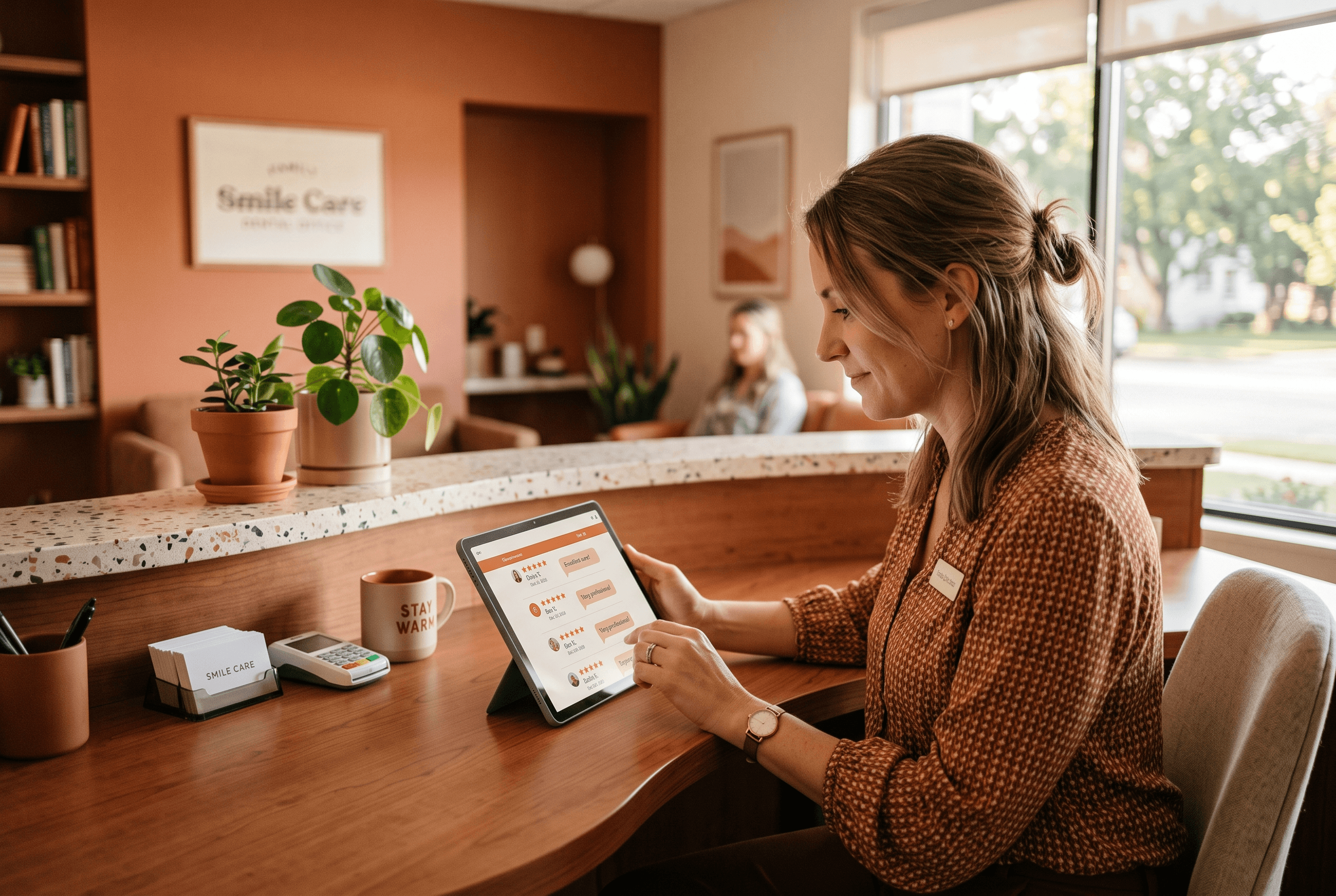
- Make reviews a weekly habit, not a campaign. Resilient local queries are decided largely on rating, recency, and how you respond. Our reviews and reputation guide covers the system; the short version is: ask every happy customer, reply to everyone.
- Add a one-tap action. Click-to-call, online booking, or a quote form that works on a phone. This is the “complete a task” trait from the Shepard research, and it’s the difference between winning and wasting the click you earned.
- Get named locally. Sponsor the little league team, get listed in local directories, show up in Fort Wayne press and community groups. Branded search is the most durable click there is, and you build it by being known off Google, not just on it.
- Change what you measure. SparkToro reports watching companies where “traffic is down and revenue is up” — but as the same study warns, that only works when the capture side (calls, bookings, conversions) stays strong.2 Track calls, bookings, direction requests, and branded-search growth instead of raw sessions — our guide to marketing metrics that actually matter walks through a simple owner-level dashboard.
What Should You Stop Wasting Time On?
Honesty cuts both ways, so here’s what this data argues against — including some things agencies still happily sell.
Generic informational blog content. A “10 signs you need a new water heater” post competes directly with an AI Overview now, and the Overview wins the click roughly 60% more often when it appears.1 Content still matters — but as reference material that makes you the cited source and builds your name, not as a traffic engine. Volume-for-volume’s-sake blogging is the first budget line to cut.
Traffic-only reporting. If your marketing report leads with “sessions are up 12%,” it’s measuring the thing Google is actively taking away. Insist on calls, form fills, and bookings.
Panic-buying “AI-proofing.” AI Mode was 0.34% of searches in this study — small today, though Google reports it has passed a billion monthly users and is growing fast.1 It’s worth preparing for deliberately (that’s what AEO is), not worth an emergency budget tonight. Be skeptical of anyone selling urgency on this.
What Does This Look Like for HVAC, Dental, and Restaurant Owners in Fort Wayne?
HVAC and home services: Your customers search “AC repair near me” and “[your company name] Fort Wayne” — both in the resilient category. Priority order: Google Business Profile, reviews, a booking or click-to-call link, and a fast site that converts. A service-area business in Huntertown or New Haven should worry far more about profile completeness than about blog traffic.
Dental and professional services: Branded and “near me” searches dominate how patients choose. The durable play is getting named — community presence, local citations, consistent reviews — so “dentist Fort Wayne” searchers recognize you before they compare you.
Restaurants: Most diners now decide without ever leaving Google or Maps. Your menu, hours, photos, and reservation link need to be complete on the profile itself. The zero-click search isn’t a lost customer — it’s a customer who found your hours and showed up.
Across all three, the pattern is the same: the open-web click is shrinking, but the local decision still has to land somewhere — and in Northeast Indiana, there’s a real advantage in being the business that took this seriously first.
Make Sure Fort Wayne Finds You — With or Without the Click
If you’re not sure where you stand, that’s a solvable problem. We’ll audit your Google Business Profile, your review footprint, and your branded-search visibility, then set up tracking for the numbers that actually pay the bills — calls, bookings, and direction requests. That’s the core of our SEO services for Fort Wayne businesses, and where it makes sense we layer in answer engine optimization so AI-driven search cites your business by name instead of summarizing around you. No fear-based pitch, no lock-in — just a clear read on where your customers are finding you today and the shortest path to being found more. Reach out and we’ll tell you honestly whether you need help or whether a weekend of profile cleanup will do it.
Fort Wayne AI Agency service
SEO Services
Dominate traditional search and AI-powered answer engines.
Learn moreFrequently Asked Questions
Is SEO dead in 2026?
No, but it has narrowed. About 68% of U.S. Google searches now end without a click, so SEO aimed at generic informational traffic delivers less every year. SEO aimed at local, branded, and high-intent searches — the categories SparkToro’s data shows are most click-resilient — still works and still sends customers. The work has shifted from ranking blog posts to owning your local presence.
What is a zero-click search?
A zero-click search is one where the person gets what they need on the results page itself — from an AI Overview, a map listing, a business profile, or a featured answer — and never clicks through to a website. Per SparkToro’s 2026 study, these grew from roughly 45% of U.S. Google searches in 2016 to 68% in early 2026.
Do I still need a website if most searches don’t send clicks?
Yes — but its job has changed. The clicks you still get are disproportionately high-intent, so the site’s priority is converting them: fast loading, clear services, one-tap calling and booking. It also feeds the AI systems and your Google Business Profile with accurate, citable information. What you need less of is a big library of generic articles.
What’s the single best thing a Fort Wayne business can do about zero-click search?
Fully build out and actively maintain your Google Business Profile, backed by a steady stream of reviews. For local queries, the results page is where the decision happens — your profile, rating, photos, and hours are what the customer sees in the moment they choose. A one-tap call or booking link turns that visibility into revenue.
Will ChatGPT and AI Mode replace Google search for local businesses?
Not yet. In SparkToro’s January–April 2026 data, Google’s AI Mode was only about 0.34% of searches, though Google reports over a billion monthly users and fast growth. The bigger near-term force is AI Overviews inside regular Google results. It’s smart to prepare — that’s what answer engine optimization is for — but the urgent work is still your local presence on Google.
Sources & Further Reading
- SparkToro: sparktoro.com/blog/in-2026-less-than-one-third-of-google-searches-still-send-a-click · In 2026, Less than One Third of Google Searches Still Send a Click (Rand Fishkin, June 9, 2026)
- SparkToro: sparktoro.com/blog/zero-click-search-what-still-works · When Google Stops Sending Clicks, What Still Works? (June 9, 2026)
- Search Engine Land: searchengineland.com/google-zero-click-searches-2026-study-479717 · Google zero-click searches reach 68% in early 2026: Study (June 2026)
Put this to work in your business
Want help with this in your business?
Tell us what you're working on — a real person in Fort Wayne replies within one business day.