How to Make One AI Video Ad Work on TikTok, Reels & Shorts
The real barrier to video for a Fort Wayne business isn’t the camera — it’s the time and cost. Here’s the one-storyline AI pipeline that turns a few photos into a week of posts.
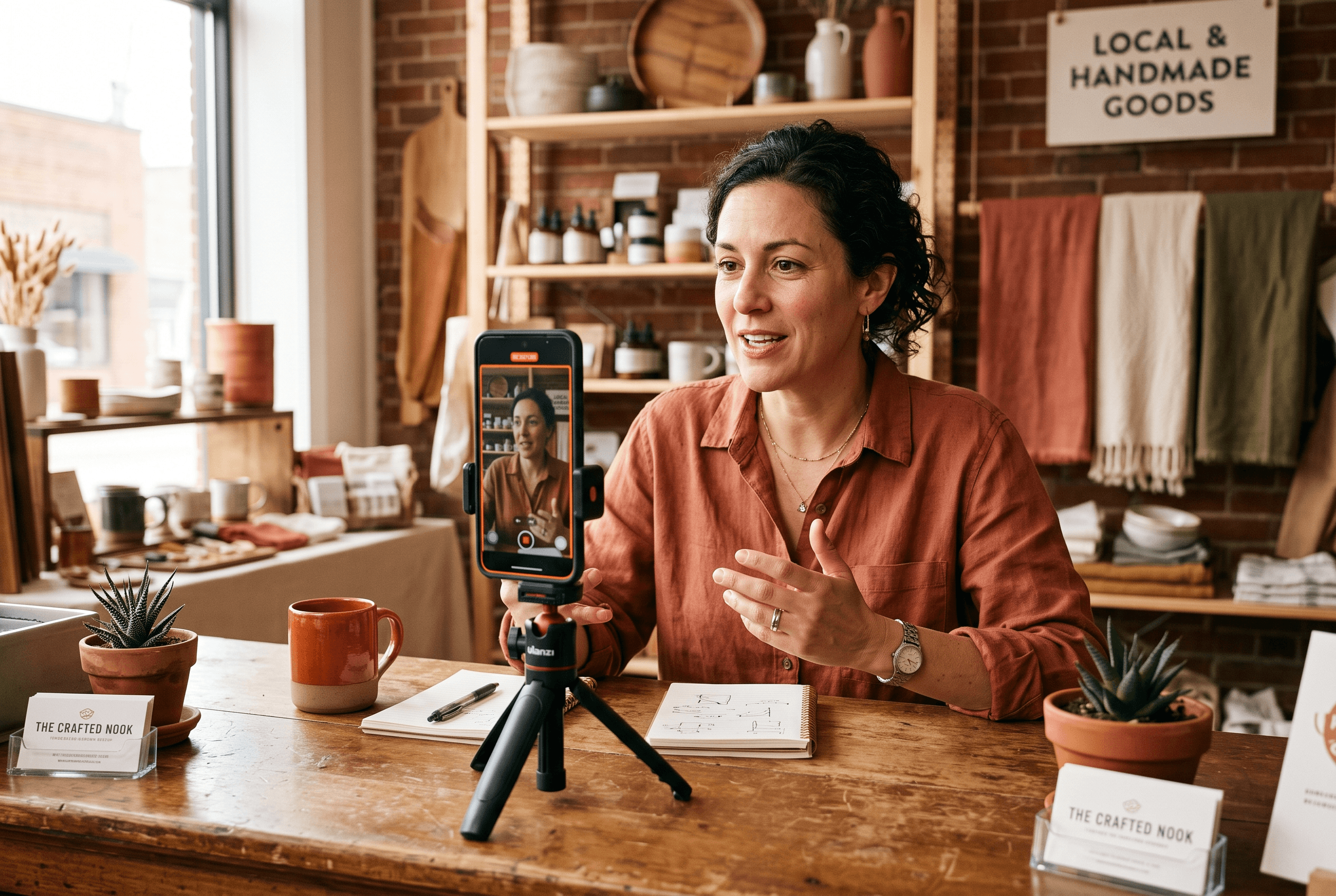
For years, the reason a Fort Wayne HVAC company or a downtown restaurant skipped video wasn’t the platforms — it was the production. A single polished promo spot meant a videographer, a shoot day, and a bill that was hard to justify against a quiet booking calendar. AI video tools have quietly removed that bottleneck, and the smart play isn’t to make more videos. It’s to build one good storyline and let it become a TikTok cut, a Reels cut, and a YouTube Shorts cut.
That’s the framework Search Engine Journal’s Pedro Cerdeira laid out for agencies scaling AI video across hundreds of clients.1 We’ve reworked it for the person who matters more here: the owner doing it for one business. The throughline from that piece is worth keeping taped to your monitor — people bring the creativity, the pipeline just makes it repeatable. Your local knowledge is the creativity. The AI is what makes it cheap and fast enough to actually ship.
Key takeaways
- Short-form video is now a discovery channel, not just an ad channel — about half of U.S. consumers have used TikTok as a search engine.
- The 2026 bottleneck is production cost and time, not platform access — and AI video tools are what remove it.
- Build one storyline (hook → problem → story → call-to-action), generate it once in vertical 9:16, then cut platform variants.
- More video is not better video: 90% of marketing leaders use AI for creative, but fewer than half see real quality gains.
- Always add captions and an AI disclosure — Reels and TikTok are watched muted, and platforms read invisible AI watermarks.
- Skip it entirely if you don’t have a clear offer yet. A bad storyline scaled is just bad-at-scale.
Why is short-form video suddenly a search problem, not just an ad problem?
The thing that changed isn’t that TikTok and Reels got bigger. It’s where people now go to find things. According to Adobe Express research, 49% of U.S. consumers say they have used TikTok as a search engine — up from 41% two years earlier.2 Among Gen Z that figure climbs to roughly two in three. When an Allen County homeowner wants to see what a ductless mini-split install actually looks like, a search bar is no longer the only place they start.
Google has noticed. Users “are going to short-form video, they are going to forums, they are going to user-generated content a lot more,” Google’s VP of Search Liz Reid has said, and Google Search Console now reports TikTok, Instagram, and YouTube posts that surface in Search and Discover.1 That overlaps directly with the AI-search work we cover in Get Found in AI Search — and Track the Leads: YouTube content can be cited by AI answers, so a well-made Short earns you two kinds of visibility at once. (One honest caveat from the source — TikTok videos themselves aren’t currently cited by ChatGPT or AI Overviews, so treat TikTok as reach and YouTube as the AI-citation play.)

So video isn’t an optional “brand awareness” line item anymore. For a local service business, it’s one of the places customers are actively looking — which makes the cost of not showing up higher than it used to be. If you’re mapping where video fits against your other channels, start with The Fort Wayne Digital Marketing Playbook, then come back here for the production side.
What’s actually stopping Fort Wayne businesses from using video?
It’s rarely strategy. Most owners know they should be posting short clips. The wall is the same one it’s always been: who shoots it, who edits it, and how many hours a week that eats. The advertising industry has already crossed that wall with AI. The IAB’s 2025 Digital Video Ad Spend & Strategy report — summarized by MarTech — found that 86% of video-ad buyers already use or plan to use generative AI for video creative, with small and mid-size businesses leading the shift precisely because it strips out the expensive production step.3
But here’s the part the hype skips, and it’s the most important sentence in this post. A WARC and LIONS Advisory study run with TikTok surveyed 400 marketing leaders and found that 90% have folded AI into their creative toolkit — yet fewer than half (45%) said it had meaningfully improved quality, even as 88% reported making more content.4 Volume went up. Quality mostly didn’t.
That gap is the whole game for a small business. AI solves output. It does not solve relevance. A generic AI clip that could belong to any HVAC company in any city is noise. A clip grounded in your shop, your trucks, your neighborhood, and a real offer is the thing that works — and that part still comes from you.
The one-storyline pipeline: how do you make one video work everywhere?
The pipeline is three steps. Do them in order and resist the urge to skip the first one.
Step 1 — Write one storyline from your own context. Feed a multimodal AI model (the chat tools that accept images) a handful of your real photos plus a few sentences about the job, the offer, and the customer. Ask it to draft a single storyline: a short script plus a visual guide. Structure it as hook → problem → narrative → call-to-action, and treat the first few seconds as the entire hook — TikTok’s own best practices lean on the opening 6 seconds. This storyline is your source of truth, and it’s the asset you keep.
Step 2 — Generate the video from reference images. Hand the storyline and your reference photos to an AI video generator and produce a vertical 9:16 clip, roughly 15–20 seconds. The source names current tools like Google Veo, Gemini’s video model, ByteDance’s Seedance, Kling, and Alibaba’s Wan.1 One blunt warning worth internalizing: these models churn. OpenAI shut down its Sora 2 API and Google has retired older Veo versions, so don’t marry a tool — own your storyline and inputs, which outlast any single model. The AI generator is a commodity; your source material and local context aren’t.
Step 3 — Add voiceover, captions, disclosure, then cut variants. Generate a text-to-speech voiceover if you need one, burn in captions (TikTok suggests about five to ten words of on-screen text per second), and embed an AI disclosure. Make that disclosure a default step, not an afterthought — many models now carry invisible watermarks like Google’s SynthID that platforms can read. Then produce three to five creative variants per ad group and refresh them when click-through or conversion rates start to slide.
How do you cut one storyline into TikTok, Reels, and Shorts versions?
The storyline stays the same. What changes is format, pacing, and how hard the captions have to work. Here’s the practical cheat sheet, pulled from the platform specs in the source:
| Platform | Format | What actually matters |
|---|---|---|
| TikTok | 9:16 vertical | Native, creator-style feel; sound-on is normal; land the hook in the first seconds |
| Reels (Instagram/Facebook) | 9:16 vertical | Same cut, but assume it’s watched muted — captions have to carry the story |
| YouTube Shorts | 9:16 vertical | Durable reach, and YouTube content can be cited by AI answers |
| Performance Max (Google Ads) | 16:9 + 1:1 + 9:16 | Supply all three ratios yourself; if you don’t, Google auto-generates and may feature the wrong detail |
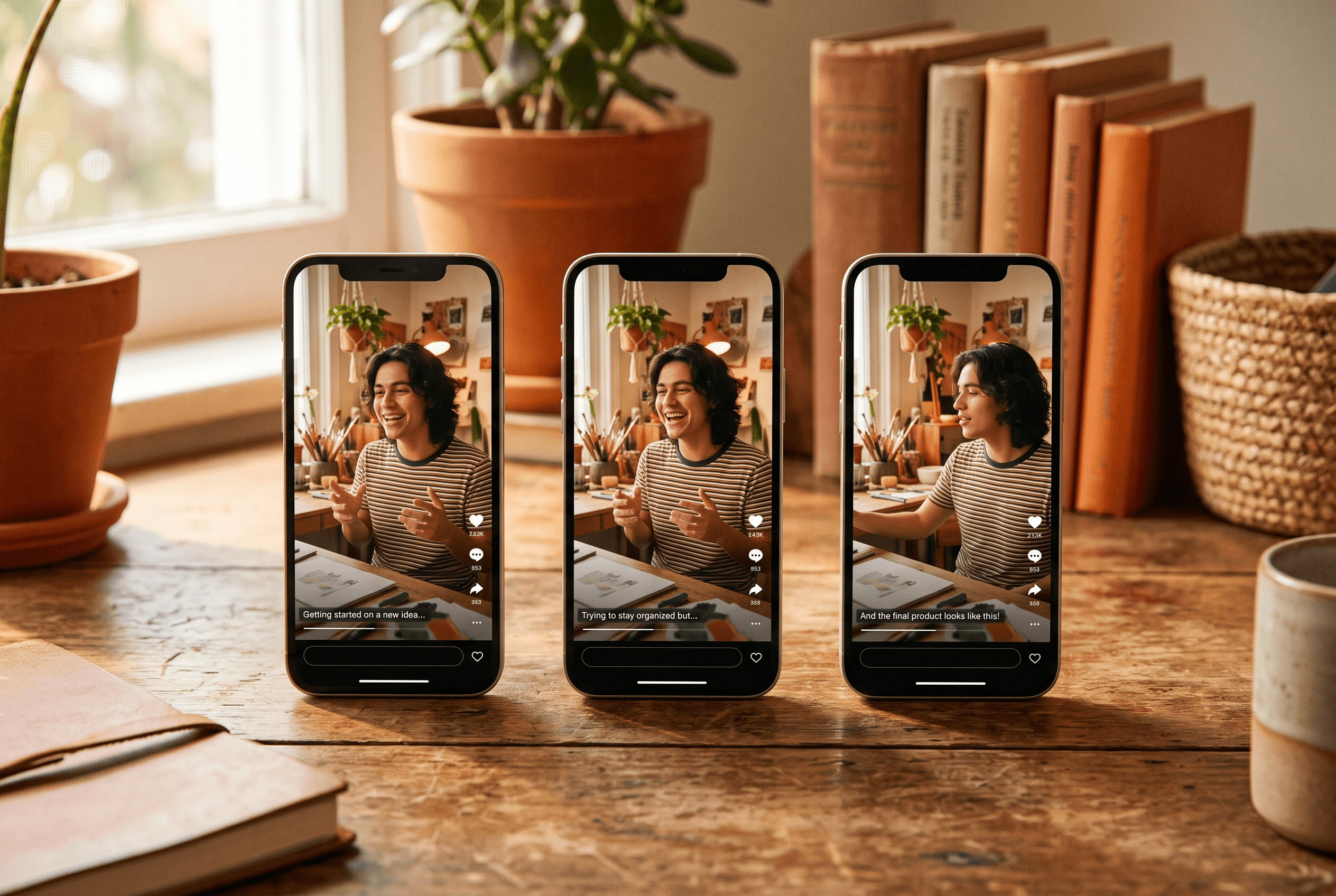
The Reels line is the one owners get wrong most often. A TikTok-native clip with the joke in the audio dies silently in the Reels feed. Same storyline, but the captions do the heavy lifting. If you’re running the paid side of this on Meta, it’s worth reading why Facebook ad costs are falling in 2026 before you set a budget — cheaper clicks don’t automatically mean cheaper leads.
When should a Fort Wayne business NOT bother with AI video?
Plenty of times, honestly. Skip it — or at least wait — if:
- You don’t have a clear offer yet. Video amplifies whatever you point it at. If the underlying pitch is mushy, you’ll just distribute mush faster.
- You can’t keep up the cadence. One great video every two months loses to a steady, unglamorous weekly rhythm. If you can’t sustain it, start smaller.
- The clip needs trust you can’t fake. For a sensitive service call or a delicate customer story, a real face on a real phone still beats a generated one. AI video genuinely struggles with anything that lives or dies on authenticity.
- You won’t disclose it. If an AI clip could mislead a customer about what your work actually looks like, don’t run it.
None of that means avoid AI video. It means it’s a tool with a job, not a magic button — and a bad storyline scaled is still a bad storyline.
What this looks like for an Auburn HVAC company or a Fort Wayne restaurant
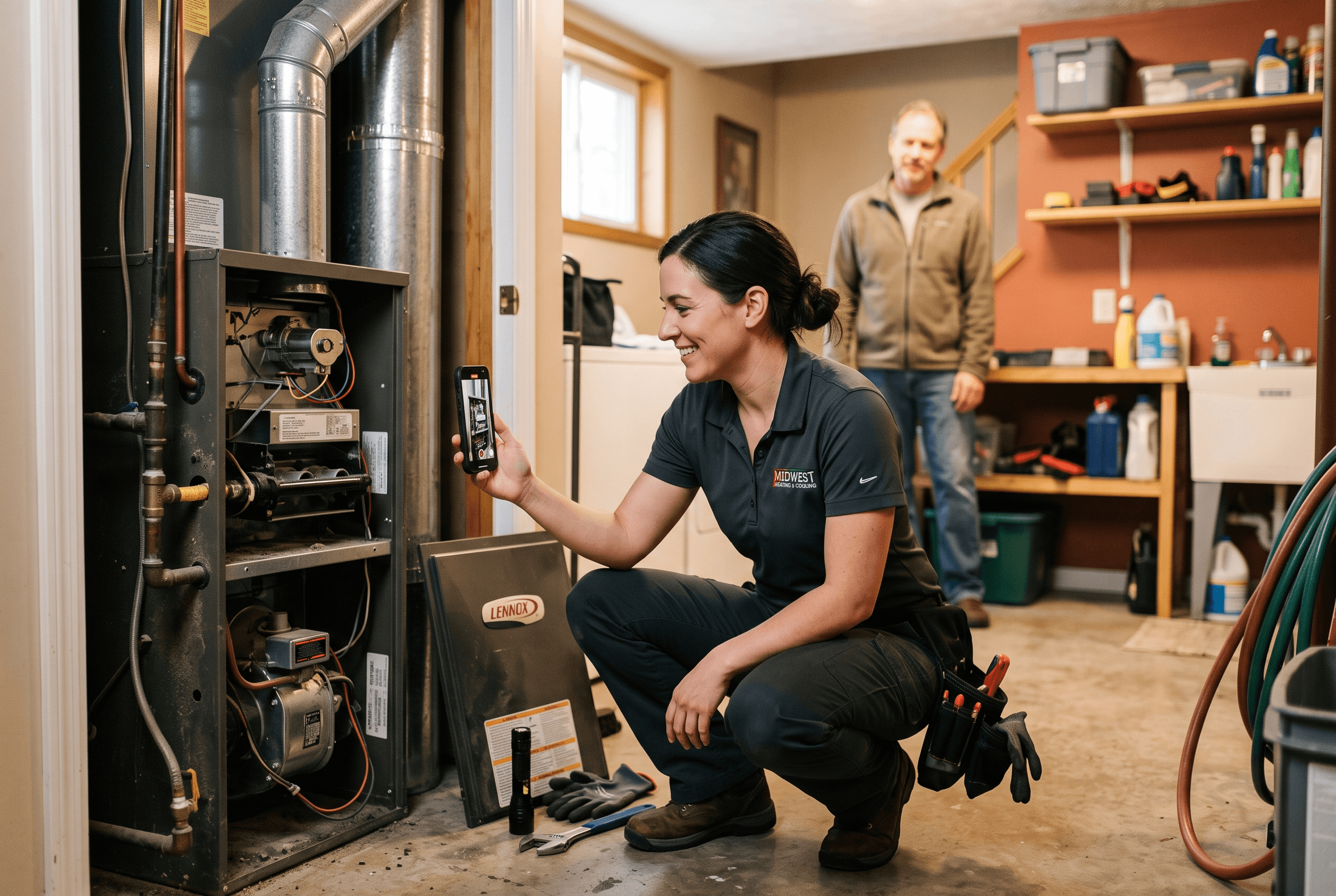
Picture an Auburn HVAC outfit at the start of furnace season. The owner has three phone photos on the drive home from a job: a clean install, a tech checking a reading, a thumbs-up from a homeowner in a DeKalb County living room. Before AI video, that was raw material nobody had time to turn into anything. Now it’s a Monday-morning storyline — “Furnace making that noise? Here’s what we check first” — generated once as a vertical clip, then cut for TikTok (sound-on, fast hook), Reels (captioned for muted viewing), and a YouTube Short that can surface when someone searches the problem.
In our experience, a single polished promo from a local Fort Wayne videographer runs anywhere from several hundred to a few thousand dollars per finished spot, plus the scheduling. The AI route trades most of that cash cost for an hour or two of the owner’s attention a week — the real expense becomes your time and taste, not the camera. A River District restaurant can do the same with a new fall-menu plate: one storyline, three cuts, posted the day the special launches instead of three weeks later. The local knowledge — which job, which neighborhood, which offer — is the part no model can supply, and it’s exactly the part that makes a Fort Wayne clip land with Fort Wayne customers.
Put one storyline to work
If you’ve got photos piling up on your phone and no system for turning them into posts, that’s a workflow problem, not a talent problem — and it’s a fixable one. Our Social Media Marketing team can help you build the one-storyline pipeline around your actual business, and our Advertising Management side can turn the best-performing cuts into paid Reels and Performance Max campaigns without torching the budget. If you’d rather talk it through first, tell us about your business and we’ll help you decide whether video is even the right next move. The goal isn’t more video for its own sake. It’s a repeatable way to show up where Fort Wayne customers are already looking.
Fort Wayne AI Agency service
Social Media Marketing
Strategic social presence that drives real business results.
Learn moreFrequently Asked Questions
Do I need different videos for TikTok, Reels, and YouTube Shorts?
No — you need one storyline and three cuts of it. All three are vertical 9:16, so the raw clip can be shared. What changes is treatment: TikTok leans sound-on and creator-style, Reels must work muted so captions carry the message, and YouTube Shorts gives you durable reach plus the chance to be cited by AI answers. For Google’s Performance Max, supply 16:9, 1:1, and 9:16 versions so Google doesn’t auto-crop the wrong detail.
Is AI-generated video good enough to represent my Fort Wayne business?
For a lot of short-form marketing, yes — but with a real limit. Industry data shows most marketers now use AI for creative, yet fewer than half say it improved quality, because volume isn’t the same as relevance. AI video works when it’s grounded in your real photos, offer, and neighborhood, and it falls flat when it’s generic. For anything that depends on genuine trust — a sensitive service story, a customer’s real face — a plain phone video often still wins.
Do I have to tell people a video was made with AI?
Treat disclosure as the default, not an afterthought. Many AI video models now embed invisible watermarks (such as Google’s SynthID) that platforms can detect, and labeling AI content is increasingly expected. Beyond the rules, it’s a trust issue: if a clip could mislead a customer about what your actual work looks like, disclose it or don’t run it.
How often should I refresh my video ads?
Plan on a quarterly refresh at minimum, and swap a creative sooner if its click-through or conversion rate starts sliding. Short-form audiences fatigue fast. The one-storyline approach makes this cheap — you’re adjusting hooks and cuts, not reshooting from scratch. Tracking which clips actually drive calls or bookings ties directly into the handful of marketing metrics that matter for a small business.
Can I advertise inside AI tools too, not just social feeds?
Increasingly, yes — paid placements are showing up in AI assistants, which is a separate decision from organic short-form video. We walk through the costs and the “is it worth it yet” question in our guide on whether your Fort Wayne business should advertise on ChatGPT. For now, treat social short-form as your discovery engine and AI ads as an experiment to watch, not a core spend.
Sources & Further Reading
- Search Engine Journal: searchenginejournal.com/scale-ai-video-tiktok-leadzai-spa/591522 · How To Scale AI Video Ads For Small Business Clients: One Storyline For TikTok, Reels & AI Search (Pedro Cerdeira, October 8, 2026)
- Adobe Express: adobe.com/express/learn/blog/using-tiktok-as-a-search-engine · Using TikTok as a search engine: Consumer and business perspectives (March 2026)
- MarTech / IAB: martech.org/genai-taking-over-digital-video-buyers-creatives · GenAI taking over digital video buyers’ creatives (July 2025)
- WARC x LIONS Advisory x TikTok: ads.tiktok.com/business/en-CA/blog/warc-report-new-creative-advantage · WARC report: TikTok and the new creative advantage (2026)
Put this to work in your business
Want help with this in your business?
Tell us what you're working on — a real person in Fort Wayne replies within one business day.