Do Comparison Posts & Listicles Still Work in Fort Wayne? (2026)
Buyer’s guides, “best of” lists, and comparison posts aren’t dead in AI search — but thin, templated ones are wasted effort. Here’s the honest Fort Wayne decision rule.

If you run a business in Fort Wayne, you have probably written — or paid someone to write — a comparison post like “Top 7 Furnaces for Indiana Winters” or a “Which Teeth-Whitening Option Is Right for You” buyer’s guide. And lately you have probably wondered whether it was a waste of a Saturday. AI Overviews answer the question before anyone clicks, every competitor is churning out the same lists, and the whole format can feel like 2019 advice that nobody updated.
Here is the honest version, and it is more nuanced than “yes” or “no.” The *format* isn’t dead. What’s dead is the thin, templated, written-for-the-algorithm version of it. A comparison post or listicle that exists only to catch a search ranking has very little future in 2026. One that genuinely helps a buyer decide — with real prices, real trade-offs, and real local context — still earns clicks, trust, and AI citations. The line between the two is the whole point of this guide.
Are comparison posts and listicles actually dead in 2026?

No — but the easy version of them is. In his October 2026 “Ask an SEO” column, Search Engine Journal contributor Adam Riemer argues that lists and comparisons “are not spammy if they are done for users vs. traffic.”1 His blunter point is the one Fort Wayne owners should tape to the wall: using these formats purely for SEO and AI optimization “is never a good idea.” The format was never the problem. The motive was.
Riemer notes that Google does not penalize listicles or affiliate links on their own. What draws trouble is large sites abusing their authority to crank out content at scale on topics they have no real expertise in. That is the thin version: a “Top 10 HVAC Companies” post assembled by someone who has never set foot in Allen County, padded to hit a word count, offering nothing a reader couldn’t get from the first AI answer.
So the question isn’t “are listicles dead?” It’s “is *mine* doing a job only I can do?” If the answer is no, AI search will summarize it into irrelevance. If the answer is yes, it still earns its keep — a theme we cover more broadly in our take on whether blogging still works for local businesses in 2026 and in the Fort Wayne Digital Marketing Playbook, where content format sits inside a wider channel strategy.
When is a comparison post or listicle worth publishing?
Riemer’s column lays out when these formats earn their place: when you compare your brand honestly against bigger competitors, when a comparison answers a real buyer question (including the kind that saves your front desk a support call), when you’re featured by a trusted curator, and when you build lists *inside* your niche and expertise so readers get a quick, vetted decision aid. The thread running through all of it is first-hand usefulness.
Here is a practical way to sort a planned post before you write a word:
| Signal | Worth publishing | Skip it |
|---|---|---|
| Expertise | You’ve actually done the work (quoted the jobs, installed the units, treated the patients) | You’d be summarizing pages you Googled this morning |
| Pricing | Real local numbers and ranges | Vague “it depends” with no figures |
| Trade-offs | Honest downsides, including when the cheaper option wins | Every option is “great,” nothing is ruled out |
| Audience | A buyer close to a decision | Nobody specific; written to rank |
| Angle | A point of view a reader can’t get elsewhere | Interchangeable with ten other posts |
If a draft lands mostly in the right column, the honest move is to not publish it — or to rebuild it until it earns a place on the left. That restraint is on-brand for us: we would rather tell you to skip a post than watch you spend hours on one AI will ignore.
What makes AI cite your comparison instead of skipping it?
Comprehensiveness used to be enough. Backlinko’s research on topical authority — how sites earn a reputation for expertise — puts the old rule plainly: “Publish comprehensively on a subject, and you’d own it.”2 That era is over. Search engines and large language models now want a clear position and external evidence that backs it up. Backlinko frames the organizing principle of modern content as “proof and belief, not coverage and keywords.”
For a comparison post, that translates into three things. First, a point of view — a recommendation you can state in one sentence, not a fence-sitting survey. Second, proof: real data, named sources, author bios that show you actually do this work in Fort Wayne. Third, structure that connects the piece to the rest of your site, with a hub page and supporting pages linked so a reader (and a crawler) can move between them in a couple of clicks. This is the same muscle behind earning clicks inside AI answers: give the model something quotable and verifiable, and it is far more likely to name you.
It is worth drawing a sharp line here. Publishing your own comparison is not the same thing as getting your business *named in* someone else’s roundup. We covered that second play separately in why Google’s AI names a “best of” blog instead of your shop. Both matter, and they reinforce each other — a strong buyer’s guide on your site plus a mention on a trusted third-party list is a better position than either alone — but they are different projects with different work.
How do you measure whether this content is working?
If you publish a comparison post and never check what it did, you can’t tell the useful ones from the busywork. One lens worth borrowing from Backlinko’s share-of-voice research is to measure your visibility relative to competitors rather than in isolation.3 The guide notes that organic position one historically earned roughly 27% of clicks — though it is quick to add those click-through benchmarks are declining as AI answers absorb more of the traffic. That decline is exactly why a thin post that only ever hoped to rank is a weaker bet than it was two years ago.
The more encouraging point for small businesses is where comparison content sits in the buying journey. Backlinko’s guidance is to prioritize decision-stage assets — comparison pages, buyer’s guides, case studies — over top-of-funnel awareness content, because the reader is closer to buying and the content converts harder. A furnace repair-vs-replace guide reaches someone who already has a cold house and a decision to make. That is a far more valuable visitor than a drive-by reader of a generic trends post. Track the handful of numbers that actually tie to revenue — calls, form fills, and booked jobs from those pages — and let the weak performers tell you what to stop making. If you want a fuller framework, our Fort Wayne Digital Marketing Playbook ranks the channels in priority order, and our SEO service team can set up the tracking.
What does this look like for a Fort Wayne business?

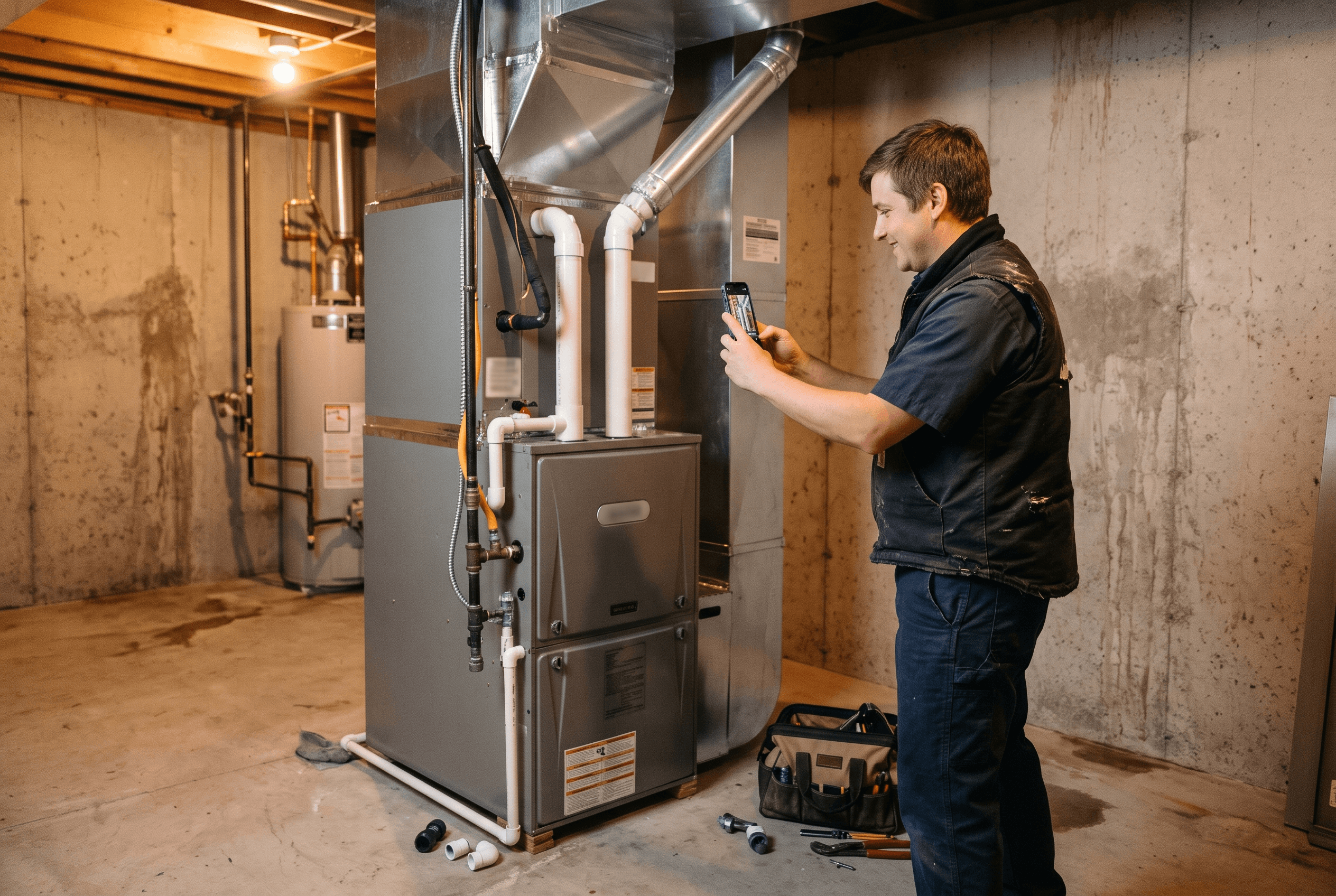
Make it concrete. A Fort Wayne HVAC company’s “repair vs. replace your furnace” comparison wins not because it has the word “furnace” ten times, but because it carries real Allen County price ranges, the seasonal reality that a mid-January no-heat call changes the math, and the honest admission that a ten-year-old unit is sometimes worth repairing one more winter. An AI answer scraped from national averages can’t tell a New Haven homeowner what a replacement actually runs here.
A Northeast Indiana dental practice’s “which teeth-whitening option is right for you” buyer’s guide works the same way: in-office versus take-home versus over-the-counter, with the practice’s own pricing and the candid note on who should skip whitening altogether. An Auburn or DeKalb County contractor’s “licensed contractor vs. handyman” roundup earns trust precisely because it names when a handyman is the smarter, cheaper call — the kind of honesty a self-promotional page never offers.
These posts carry first-hand detail — real quotes, real seasonal factors, real names of the trade-offs — that a generic AI synthesis lacks. That is the whole advantage a local business has over a national content mill, and comparison content is one of the cleanest places to use it. Once you’ve made something genuinely good, the next job is getting it in front of people, which is where a deliberate content distribution system that compounds earns back the effort.
Put your buyer’s guides to work
If you’re sitting on a stack of old listicles that no longer pull their weight — or you know a strong buyer’s guide would help close more jobs but you don’t have time to write it — that’s squarely what our answer engine optimization work is for. We help Fort Wayne and Northeast Indiana businesses decide which comparison content is worth publishing, rebuild the thin posts into genuinely useful, citable assets, and wire them into the rest of your site so AI tools and buyers both find them. We’ll also tell you plainly when a post isn’t worth making — get in touch and we’ll start with the content you already have.
Fort Wayne AI Agency service
Answer Engine Optimization
Get cited inside AI answers from ChatGPT, Perplexity, and Claude.
Learn moreFrequently Asked Questions
Are listicles bad for SEO in 2026?
No. Google does not penalize listicles or comparison posts by format, as Search Engine Journal’s Adam Riemer notes. What gets punished is thin, scaled content produced outside your expertise purely to chase rankings. A listicle built to genuinely help a buyer decide is still legitimate, useful content.
Will AI Overviews just summarize my comparison post anyway?
AI will summarize generic comparisons that only restate what’s already everywhere — so those earn you little. But AI tools tend to cite content with a clear point of view and outside proof, not pages that merely cover a topic. A comparison with real local pricing and first-hand experience gives the AI something it can’t synthesize from other pages, which makes a citation more likely.
What’s the difference between publishing a “best of” list and getting named in one?
Publishing your own comparison or buyer’s guide is content you control on your site. Getting named in a third-party “best of” list is earned placement on someone else’s page, which Google’s AI often reads names from. They’re different projects, and most Fort Wayne businesses benefit from doing both.
How do I know if a comparison post is worth writing?
Run it through one test: can you add something an AI can’t pull from ten other pages — real prices, honest trade-offs, first-hand local detail? If yes, publish it. If you’d mostly be summarizing what you Googled this morning, skip it or rebuild it until it clears that bar.
Do comparison posts actually lead to sales for a Fort Wayne business?
They tend to, because they reach readers at the decision stage who are close to buying — which is why content strategists prioritize buyer’s guides and comparisons over awareness content. Track calls, form fills, and booked jobs from those specific pages to confirm which ones earn their keep.
Sources & Further Reading
- Search Engine Journal: searchenginejournal.com/ask-an-seo-do-comparison-posts-roundups-listicles-still-have-any-value/585084 · Ask An SEO: Do Comparison Posts, Roundups & Listicles Still Have Any Value? (October 22, 2026)
- Backlinko: backlinko.com/topical-authority · Topical Authority: What It Is and How to Build It (January 1, 2026)
- Backlinko: backlinko.com/share-of-voice · Share of Voice: What It Is and How to Measure It (April 30, 2026)
Put this to work in your business
Want help with this in your business?
Tell us what you're working on — a real person in Fort Wayne replies within one business day.