How Fort Wayne Businesses Win Clicks From Google AI Answers
Google just put more clickable links — placed higher — inside its AI answers. That’s a real opening for Fort Wayne businesses to win back clicks. Here’s how to earn those citations.

For the last two years, the story Fort Wayne owners kept hearing about AI search was a grim one: Google’s AI Overviews answer the customer’s question right at the top of the page, the customer never scrolls, and your website never gets the click. A lot of that worry was fair. So it’s worth paying attention when the pendulum swings the other way — even a little.
On October 15, 2026, Google announced five changes to how links show up inside its AI answers, and the headline is a genuine piece of good news: inline links to source websites are now placed higher up, in more responses. That reporting comes from Search Engine Journal’s write-up of the announcement, which attributes the post to Hema Budaraju, Google’s VP of Product Management for Search.1 9to5Google covered the same five updates the day they dropped.2 In plain terms, Google is starting to hand more clicks back to the web — and for a Fort Wayne business, there’s a real, winnable opening in how it’s doing it.
This isn’t a reason to celebrate or panic — it’s a reason to do a few specific things. Below is the honest read: what changed, why the local angle beats the national one, and the catch nobody’s putting in the headline. If you’re just getting your footing here, start with how a Fort Wayne small business should actually start with AI, then come back.
Key takeaways:
- Google says it has made “continued and substantial increases to the presence of inline links” in AI answers, and those links now appear higher up in more responses — but it published no figure for the size of the increase.1
- Google is testing a top-of-answer section for task-based queries that lists just the one or two official sources a searcher needs — a slot that’s genuinely winnable at the local level.1
- Preferred Sources usage has grown to “more than seven times what it was at the beginning of the year,” and the “Preferred” badge is expanding across AI Overviews and AI Mode.1
- End-of-answer “Dive Deeper” links are getting image thumbnails and a more clickable design.2
- The catch: Search Console reports every link in an AI Overview at the overview’s single position, so moving a link higher won’t change its reported position — track referral traffic and phone calls instead.1
- Most of the win comes from the fundamentals you already control: trustworthy local pages, a consistent Google Business Profile, and clean structured data.
What actually changed in Google’s AI answers?
Google bundled five updates into one announcement, and it helps to separate the ones that matter for a local business from the ones that don’t.
The big one: inline links are moving up. Google said it has made “continued and substantial increases to the presence of inline links” in AI Overviews and AI Mode, and those links now show higher in responses more often, per Search Engine Journal’s reporting.1 Read the honest part of that sentence carefully — Google gave no number. There’s no “+35% clicks,” no percentage, nothing to quote. Anyone selling you a specific figure for this change is making it up. What we can say plainly is the direction: more link real estate, placed where people actually look.
Second, Google is testing a dedicated section at the very top of some answers for “task-based” queries — searches where there are really only one or two official places on the web to get something done. Google lists those official sources first and adds a line about why each one is useful.1 Hold that thought, because it’s the most interesting change for a Fort Wayne business, and we’ll come back to it.
Third, the links at the end of AI answers — the “Dive Deeper” suggestions — are getting image thumbnails and a more clickable design, according to 9to5Google.2 Small change, but thumbnails pull the eye.
Fourth and fifth are mostly context: Google is expanding its Preferred Sources carousels to more locations and languages, and testing clickable creator and publisher names on AI Mode video results that link to Search profiles. Those profiles, per Search Engine Journal, require at least 10,000 followers on YouTube, Instagram, X, or TikTok.1 Most Fort Wayne HVAC shops, dental offices, and law firms won’t clear that bar, so treat Search profiles as background noise for now, not a to-do.

Why is this good news for a Fort Wayne business?
Because the whole fear of AI search was that it would be a dead end — a wall of AI text with no way back to your door. More links, placed higher, is the opposite: the AI is more willing to say “here’s who actually does this,” and to make that a click.
The catch with the national version of this story is that for a broad query, the sources Google surfaces are usually big national brands — a small business can’t out-authority Wikipedia on a generic term. But local search has never worked like national search, which is why this update lands differently in Allen County than it does in a blog aimed at enterprise SEO teams.
The companion piece on what AI says when someone Googles your business by name covers the branded-search side of the same shift. This post is about the other half: the unbranded “who should I hire” searches where a new customer doesn’t know your name yet — and where more, higher links give you a path onto the page.
How does a Fort Wayne business become one of the “1–2 official sources”?
This is the part worth slowing down on. Google’s new test surfaces, at the top of an answer, the one or two official sources a searcher needs to complete a task or get an exact answer.1 On a national query, “one or two official sources” usually means a government site or a dominant brand. On a local query, the field is often wide open.
Think about the searches your customers actually run: “emergency furnace repair New Haven,” “pediatric dentist accepting new patients Fort Wayne,” “estate attorney DeKalb County.” For queries like those, there frequently aren’t many authoritative, genuinely local sources for an AI to choose from. That scarcity is your opening. You’re not competing with Wikipedia for “furnace repair” in the abstract — you’re competing with a handful of other Allen County shops to be the clearest, most trustworthy local answer for a specific, local task. That’s a fight a well-run small business can win.
Winning it comes down to being the kind of source an AI can read, trust, and cite:
- A real, specific local page for each service and area — not one thin “Service Areas” list and not a stack of near-duplicate city pages that AI engines skip. We lay out the honest build in build local pages AI search can actually trust.
- Clear, factual answers to the actual question — hours, service area, pricing ranges, what you do and don’t handle. AI answers reward pages that state facts plainly, which is the core idea behind answer engine optimization.
- Structured data so the machine can parse your business details without guessing.
- A consistent Google Business Profile and clean citations across the web, which is still the backbone of local SEO and the strongest signal an AI has that you’re a legitimate local operator.
None of it is new. It’s the same foundation that earns Map Pack rankings — now doing double duty to earn AI citations.
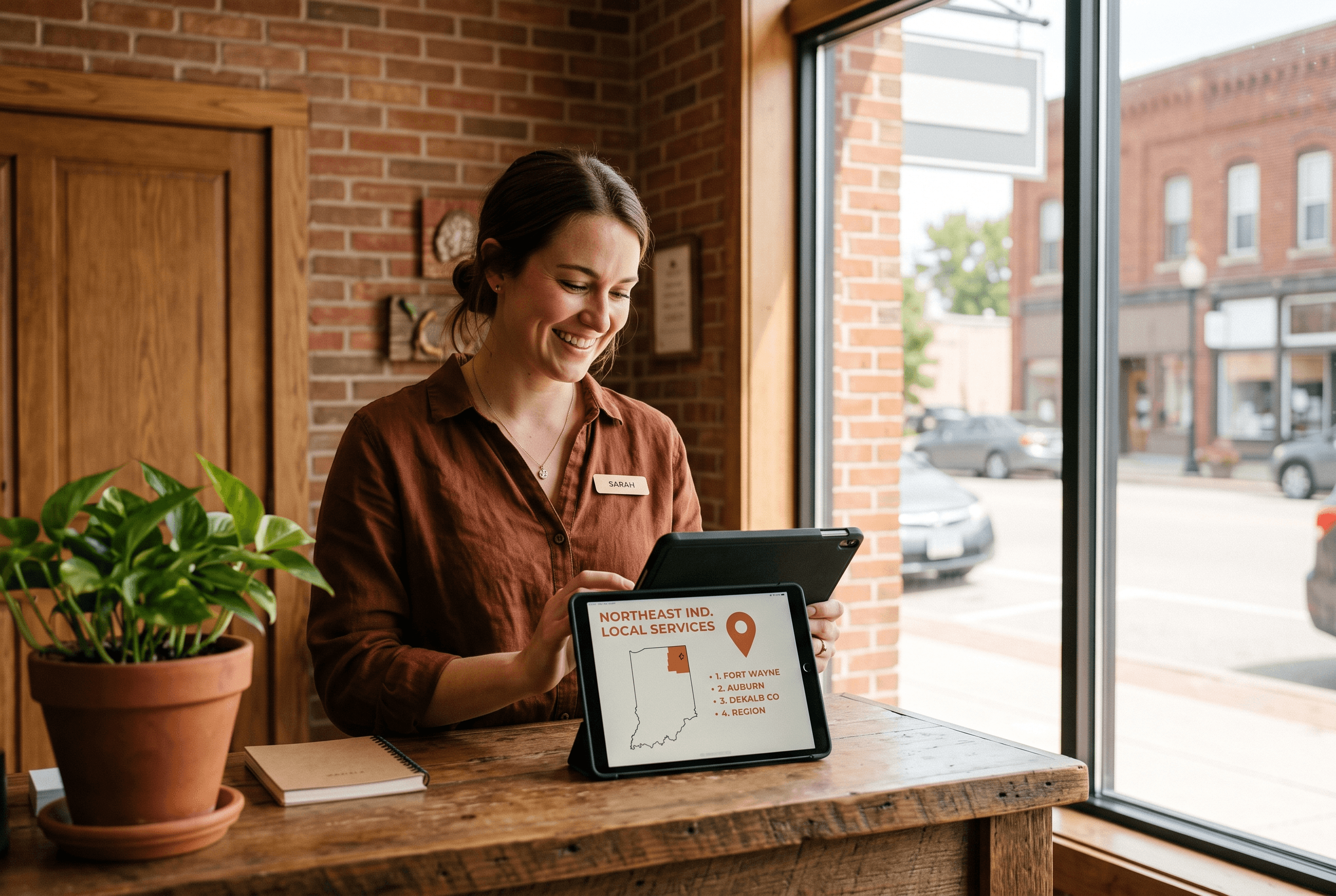
Should you ask customers to add you as a Preferred Source?
One of the five changes expands Google’s Preferred Sources feature further into AI answers. It’s worth understanding, with a clear-eyed take on how much it can do for a small local business.
Preferred Sources lets a searcher choose sites they want to see more of; links from those sites then carry a visible “Preferred” badge inside results. Google first brought the feature into AI Overviews and AI Mode in May 2026, expanding it beyond the Top Stories box it started in, as PPC Land reported.3 At that May launch, Google said people had already selected more than 345,000 unique sources, and claimed users were roughly twice as likely to click a “Preferred”-labeled link — though it didn’t disclose how it measured that, so treat the “twice as likely” figure as the company’s claim, not independent fact.3 This month, Google added that Preferred Sources usage is now “more than seven times what it was at the beginning of the year.”1
Here’s how a business actually gets picked. Per Google’s own publisher guidance, you can hand readers a deep link (in the form google.com/preferences/source?q=yourdomain.com) or add a one-click button to your site that opens Google’s source-preferences tool with your site pre-filled.4 One important limit: only root domains and subdomains qualify — a subdirectory like yoursite.com/blog isn’t eligible on its own.4
The honest take for a Fort Wayne owner: Preferred Sources is built with news publishers in mind, and only helps with customers who already know you and bother to opt in. It’s a nice reinforcement for a business that publishes useful local content and has a following — a reason to add that button to your footer — but it won’t get a stranger to find you. The trustworthy-local-pages work above moves the needle far more.
What this means for a Fort Wayne or DeKalb County home-services shop
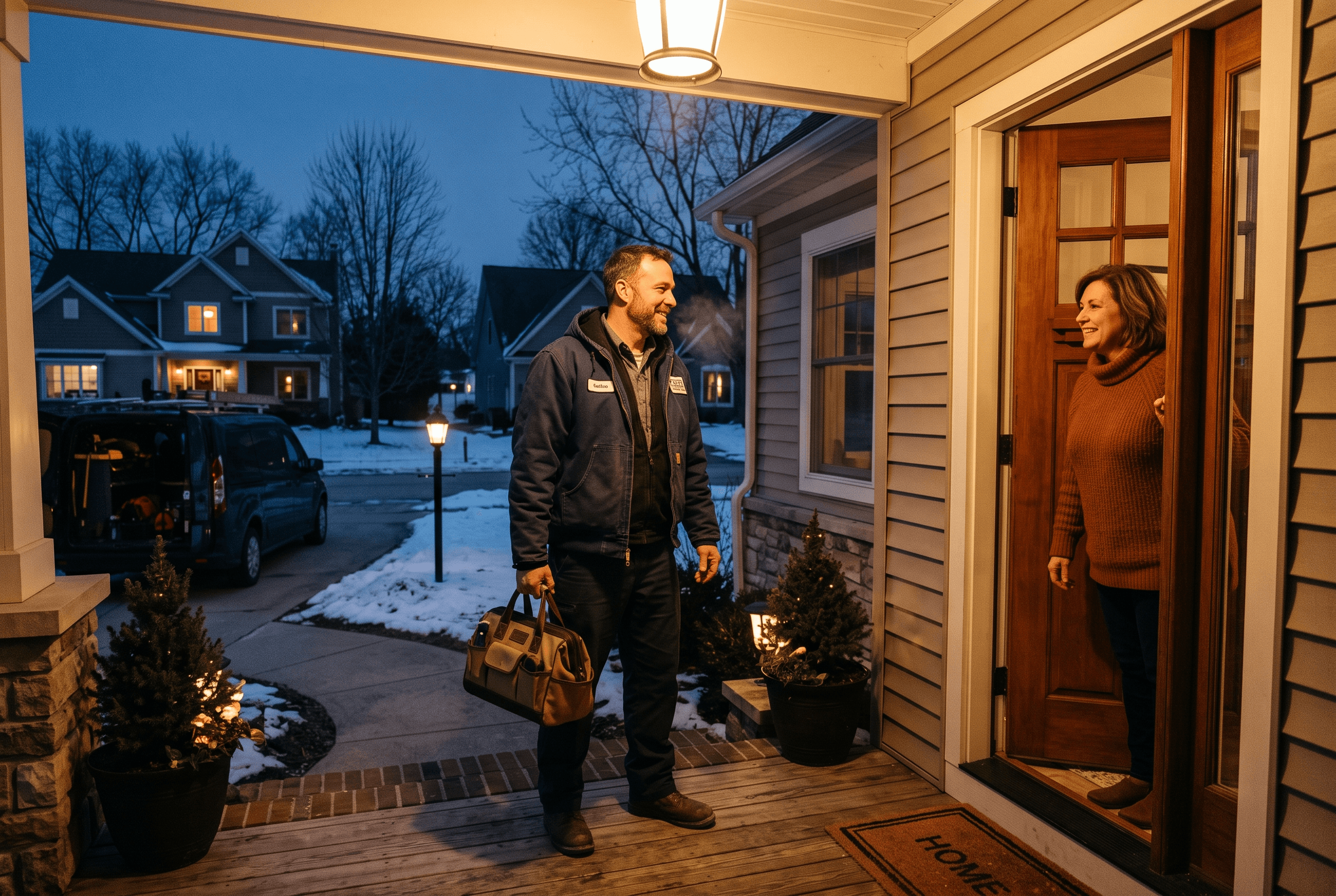
Picture a family-run heating-and-cooling company based in Auburn that also serves New Haven, Huntertown, and the north side of Fort Wayne. A year ago, the owner watched AI Overviews answer “why is my furnace short cycling” without ever sending a visitor to the site, and reasonably concluded AI search was a tax with no upside.
This update changes the calculus a little. When a homeowner in Allen County searches with clear local intent — “emergency furnace repair near me” at 9 p.m. on a January night — Google is now more willing to put a clickable link to a real local provider higher in the answer, and its task-based test wants to name the official place to get the job done. A company with a genuine, specific New Haven furnace-repair page, an accurate Google Business Profile with correct emergency hours, and recent reviews is a far better candidate for that slot than a national lead-gen site that doesn’t turn a wrench in DeKalb County.
That’s the whole Northeast Indiana opportunity: locally, there usually aren’t many authoritative sources competing for a specific task query, so the business that does the unglamorous trust-building work gets to be the answer. For a deeper walk-through of connecting that visibility to booked jobs, see get found in AI search and prove it turned into a real customer.
The catch: you probably won’t see this win in your reports
Here’s the part we’d want a neighbor to know before they get their hopes too high. Even if Google starts sending you more clicks from AI answers, your standard Search Console position report likely won’t show it.
As Search Engine Journal points out, Google’s Search Console assigns every link within an AI Overview the overview’s single position in search results.1 So if your link moves from the bottom of an AI answer to the top, its reported position doesn’t change — the overview still counts as one position. The lift is real; the standard position report in Search Console just isn’t built to show it.5 On top of that, the AI-features data Google exposes is mostly about impressions, not a clean count of clicks from AI answers.
So measure what actually matters instead: phone calls, form fills, and referral traffic. Watch whether referral visits tick up, keep call tracking on so you know which channel booked the job, and don’t expect a tidy “AI Overview clicks” line in your dashboard. We get into the attribution weeds in whether Fort Wayne businesses can finally track their Google AI traffic. The short version: trust the phone and the booked calendar over any single report.
Turn the opening into booked jobs
If reading all this leaves you thinking “I don’t have time to rebuild my local pages, tune my Google Business Profile, and babysit the reports” — that’s a fair place to land, and it’s exactly the work we do. Our answer engine optimization work is about making your business the clear, trustworthy answer AI engines want to cite for Fort Wayne and Northeast Indiana searches, built on the same local SEO foundation that earns Map Pack rankings. We’ll tell you honestly where you already stand and what’s actually worth doing — and if your site is in good shape, we’ll say so rather than sell you a project. Reach out for a straight assessment of how visible your business is in AI answers today.
Fort Wayne AI Agency service
Answer Engine Optimization
Get cited inside AI answers from ChatGPT, Perplexity, and Claude.
Learn moreFrequently Asked Questions
Did Google say how much it increased inline links in AI answers?
No. Google described “continued and substantial increases to the presence of inline links” and said they now appear higher in more responses, but it published no percentage or figure. Be skeptical of any source quoting a specific number for this change — Google didn’t provide one.
How can my Fort Wayne business get cited as an "official source" in an AI answer?
Google is testing a top-of-answer slot that names the one or two official sources for a task-based query. Locally, there often aren’t many authoritative sources competing for a specific query, so your best path is to be the clearest one: a real, specific service-and-area page, accurate structured data, factual answers to the actual question, and a consistent, well-reviewed Google Business Profile.
What are Google Preferred Sources, and are they worth it for a small business?
Preferred Sources lets searchers pick sites they want to see more of, giving those sites a “Preferred” badge in AI Overviews and AI Mode. You can invite readers with a deep link or an on-site button, but only root domains and subdomains qualify, not subdirectories. It’s a reasonable reinforcement for a business that publishes useful local content and has a following, but it won’t help a stranger discover you — the trustworthy-local-pages work matters more for most local service businesses.
Will I be able to see these extra clicks in Google Search Console?
Probably not in the standard position report. Search Console assigns all links in an AI Overview the overview’s single position, so moving your link higher doesn’t change its reported position. Track referral traffic, form fills, and phone calls instead to judge whether AI answers are sending you real business.
Is this good news or bad news for local businesses?
Cautiously good. More links placed higher means AI answers are sending more traffic back to websites, and local, task-specific queries are winnable because there usually aren’t many authoritative local sources competing. The upside is real but not automatic — it goes to the businesses that do the trust-building work, not to everyone equally.
Sources & Further Reading
- Search Engine Journal: searchenginejournal.com/google-inline-links-higher-ai-search-responses/593089 · Google Puts Inline Links Higher In More AI Search Responses (Matt G. Southern, October 15, 2026)
- 9to5Google: 9to5google.com/2026/10/15/google-ai-mode-overviews-links · Google AI Mode and AI Overview updates work to elevate links (Abner Li, October 15, 2026)
- PPC Land: ppc.land/google-brings-preferred-sources-into-ai-overviews-and-ai-mode-today · Google brings Preferred Sources into AI Overviews and AI Mode today (May 27, 2026)
- Google Search Central: developers.google.com/search/docs/appearance/preferred-sources · Help your readers find your site through preferred sources in Google Search
- Google Search Console Help: support.google.com/webmasters/answer/17010961 · Performance report (Search results): Common tasks and use cases
Put this to work in your business
Want help with this in your business?
Tell us what you're working on — a real person in Fort Wayne replies within one business day.