What Does SMS Text Marketing Cost in Fort Wayne? (2026)
An honest, itemized cost breakdown of SMS text marketing for a Fort Wayne small business in 2026 — per-message rates, the 10DLC registration most guides skip, and whether it’s worth it.

Texting your customers costs less than almost any marketing channel you already own — but the real number isn’t the one most “SMS pricing” pages quote. The per-message rate is only part of it. The part they leave out is what actually trips up first-time senders in Fort Wayne: a mandatory registration that, since early 2025, US carriers enforce by blocking your texts entirely if you skip it. So the honest answer to “what does it cost to text my customers?” has three line items, not one.
Here’s the short version. Sending a text runs a fraction of a cent to a few cents per message, a texting platform starts around $10–$20 a month, and a one-time A2P 10DLC registration adds roughly $4 for your business plus $10–$15 per campaign and about $10 a month after that. Text messages also get opened — around 98% of them, usually within minutes — which is why a “your tech is 20 minutes out” text or an automated dental reminder can pay for the whole setup on its own. This guide breaks down each of those numbers, explains the registration nobody warns you about, and gives you an honest read on whether it’s worth it for a Northeast Indiana small business — one channel in our broader Fort Wayne digital marketing playbook.
Key takeaways:
- Per message is cheap: roughly $0.007 to $0.03 per text segment in the US, where a “segment” is about 160 characters.
- The platform is modest: a texting or email-plus-SMS platform commonly starts around $10–$20 a month and up with volume.
- Registration is not optional: since February 2025, US carriers block business texts from unregistered numbers, so texting from your personal cell no longer reaches anyone reliably.
- 10DLC is the hidden cost: about $4 one-time to register your brand, $10–$15 per campaign to set up, and roughly $10 a month per campaign after that.
- Consent is the rule: text only people who asked to hear from you — a purchased list is a legal problem, not a shortcut.
- RCS is worth knowing, not urgent to buy: the richer, branded version of texting is now default on iPhone and Android, but plain SMS still does the core job.
How Much Does It Actually Cost to Text Your Customers?
The direct answer: expect a few cents or less per message, plus a monthly platform fee, plus the registration costs in the next section. No line item is large — the surprise is that there are three of them.
Start with the per-message rate. According to Omnisend’s 2026 pricing breakdown, US SMS runs roughly $0.007 to $0.009 per message on high-volume tiers — about $7 to $9 to reach 1,000 contacts with a single-segment text — and climbs toward $0.02–$0.03 on smaller-volume plans.1 The catch is the word segment: a standard text holds about 160 characters, and anything longer is split into multiple billable segments. Add an emoji and the limit drops to about 70 characters, so a chatty message with symbols can quietly cost two or three times what you expected. Picture-heavy MMS costs more still.
Then there’s the platform — the software that sends and schedules texts, manages your contact list, and handles opt-outs. Omnisend’s SMS add-on bundles start at about $10 a month; many all-in-one platforms land in the $20-and-up range and fold message credits into the monthly plan. That’s the piece that turns “texting from my phone” into a real, compliant channel with reporting and automation behind it.
| Cost item | Typical US range | Notes |
|---|---|---|
| Per SMS message | ~$0.007–$0.03 per segment | A segment is ~160 characters (~70 with emoji/symbols) |
| Texting platform / SMS add-on | from ~$10–$20/month | Higher with volume and features; often bundles credits |
| Carrier fee (registered traffic) | ~$0.003–$0.005 per segment | Added on top of the per-message rate |
| 10DLC brand registration | ~$4 one-time (up to ~$15) | See the compliance section below |
| 10DLC campaign setup | $10–$15 one-time | Per campaign |
| 10DLC campaign monthly | ~$10/month per campaign | Ongoing |
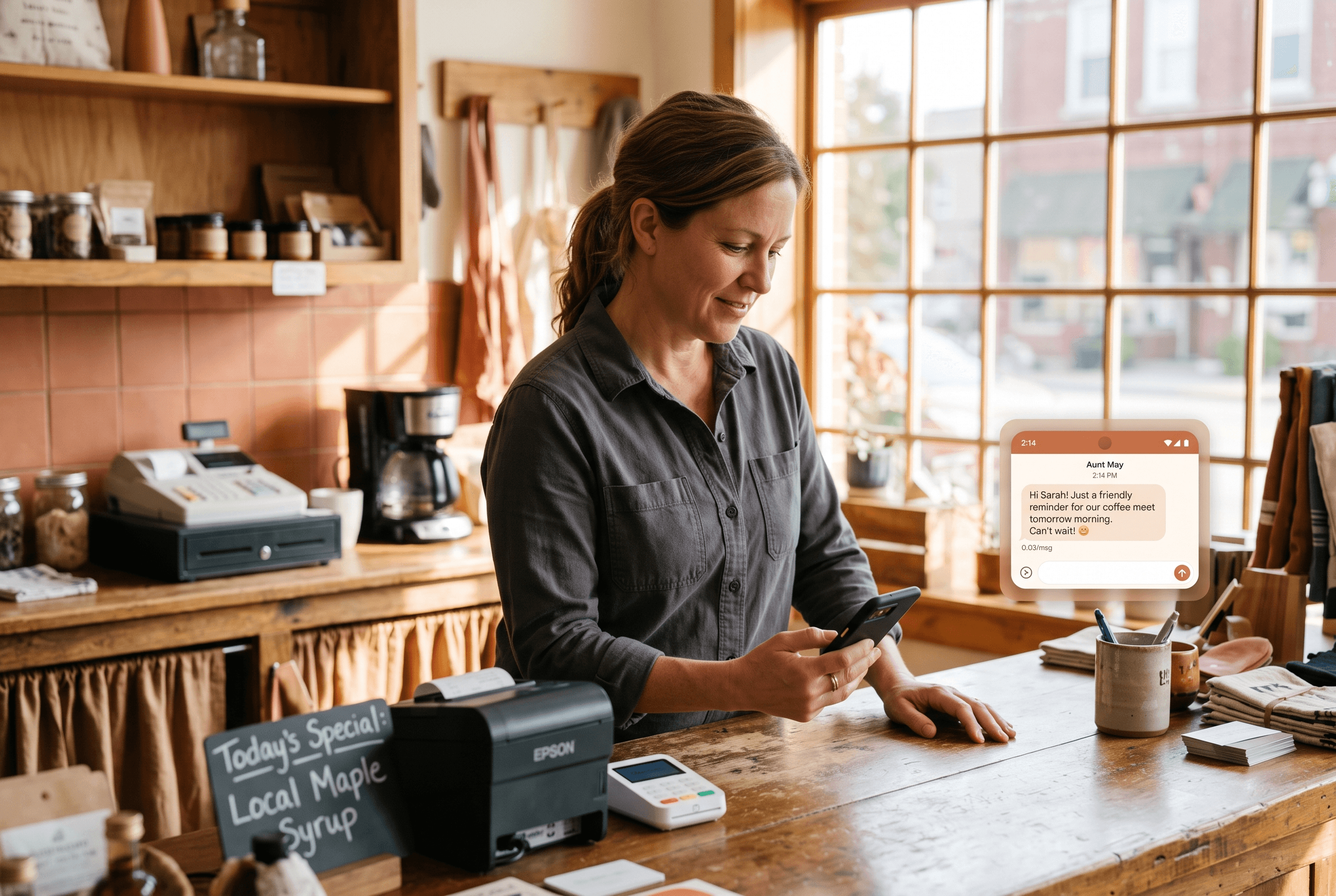
Add it up for a typical small local sender and a modest program often runs around $30–$50 a month all-in — most of it the platform and registration, not the messages. That’s cheaper than a single boosted Facebook post, but only if you handle the registration correctly, which is exactly where most first-timers stumble.
Do You Legally Need to Register Before You Can Text Customers?
Yes — and this is the single most important thing in this guide. Per TextBolt’s 10DLC compliance guide, since February 1, 2025, US carriers block essentially 100% of unregistered application-to-person (A2P) 10DLC traffic — the technical name for business texting over standard 10-digit numbers.2 Translated: the old “I’ll just text them from my cell” workaround now means your messages quietly never arrive.
Registration itself, called A2P 10DLC, is a one-time process with modest fees. TextBolt puts brand registration at around $4 (up to about $15 with some providers), campaign setup at $10–$15 as a one-time cost, and an ongoing fee of roughly $10 per campaign per month. Registered traffic also carries a small carrier surcharge of about $0.003–$0.005 per segment — while unregistered traffic, on the rare occasions it gets through, is surcharged higher and increasingly just blocked.
To register, you’ll need your EIN or Tax ID, your legal business name and address, a live website with a published Terms of Service and Privacy Policy (both need SMS-specific language), three to five sample messages, and documented proof of opt-in consent. That website-and-policy requirement catches a lot of local businesses off guard. Setting up the registration cleanly is a routine part of our business automation services, because a stalled or rejected registration is the most common reason a first campaign never sends.
The stakes for ignoring this aren’t trivial. TextBolt notes T-Mobile enforcement can reach up to $10,000 per content violation, and several states have added their own texting laws on top. Combined with federal TCPA exposure for texting people who never opted in, that’s the real reason to treat texting as a set-up-once, set-up-right channel. The honest guidance is simple: only text people who asked to hear from you.

SMS or Email — Which Should a Fort Wayne Business Use?
This is a false choice for most local businesses: the answer is usually both, for different jobs. Text’s edge is reach. Per Sender’s 2026 open-rate data, SMS open rates sit around 98% — roughly five times email’s — and about 90% of people open a text within three minutes.4 There’s no spam folder, no promotions tab, no algorithm deciding whether your message shows up.
That immediacy is also the limitation. A text is short, interruptive, and best reserved for things a customer wants right now. So the practical split:
| Use text for | Use email for |
|---|---|
| Time-sensitive, transactional, high-open moments a customer is glad to get: appointment reminders, “your technician is on the way,” “your table’s ready,” “your order is in,” a same-day slow-night special | Longer content, newsletters, detailed receipts, and anything you want visually rich and archivable — cheaper at scale and better for storytelling |
The mistake is using text like email — blasting long promotional messages several times a week. That’s the fastest way to earn opt-outs, because the same immediacy that makes text powerful makes it annoying when overused. Use text for the urgent 20% and email for the rest. Many of the highest-value texting use cases are really automation in disguise — the reminders and confirmations we cover in our guide to 12 tasks Fort Wayne businesses should automate — which is why texting and automation belong in the same conversation.
What Is RCS, and Do You Need It Yet?
You’ve probably noticed some business texts now show a company name, a logo, and tappable buttons instead of a plain gray bubble. That’s RCS — Rich Communication Services — and it’s the reason texting is quietly getting an upgrade. According to Messente’s report on RCS business messaging, RCS adds verified branding, images, carousels, buttons, read receipts, and typing indicators, turning a text into something closer to an app-like experience.3
The reason it matters now is a turning point Messente flags: Apple added RCS support in late 2024, which closed the long-standing gap between iPhone and Android messaging. RCS now reaches over 80% of smartphone users in major markets including the US, and more than a billion RCS messages a day were flowing in the US as of mid-2025. For a business, the appeal is trust — a verified, branded message is harder to mistake for spam than a number a customer doesn’t recognize.
Here’s the honest part: you don’t need to rush out and buy RCS. Most small-business texting platforms are still rolling it out, and plain SMS still does the core job of reminders and alerts perfectly well. Treat it as a maturing tool — worth knowing about as you pick a platform, worth choosing a provider with a clear RCS path, but not a reason to overhaul anything today.
Is Text Marketing Actually Worth It?
For most Fort Wayne service businesses the math is favorable — but let’s be clear about what’s measured and what’s just logic. The costs above are real, vendor-published figures. Any return figure is illustrative, because your numbers depend on your business, not a benchmark.
The illustrative case is easy to follow. A modest texting program costs roughly $30–$50 a month all-in. A single recovered no-show appointment, one filled table on a slow night, or a handful of same-day bookings is usually worth far more than that to a local business — so the break-even bar is low. But treat that as illustrative reasoning, not a guaranteed Fort Wayne result; we’d want to measure your actual opt-in rate, message volume, and conversion before promising a number.
Text also compounds with what you already do. A review-request text the day after a completed job is one of the most reliable ways to lift your Google profile — the exact lever in our online reviews and reputation guide. And if you’re weighing texting against automation like an AI chatbot for missed calls, they’re complementary: the chatbot answers the customer who reaches out, and text reaches customers proactively. Where texting is not worth it is if you can’t get genuine opt-ins, or your customers rarely need time-sensitive messages — an honest reason some businesses should skip it for now.
What This Looks Like for Fort Wayne HVAC, Dental, and Restaurants
Texting earns its keep differently depending on the trade, and Northeast Indiana has plenty of businesses where the fit is obvious.
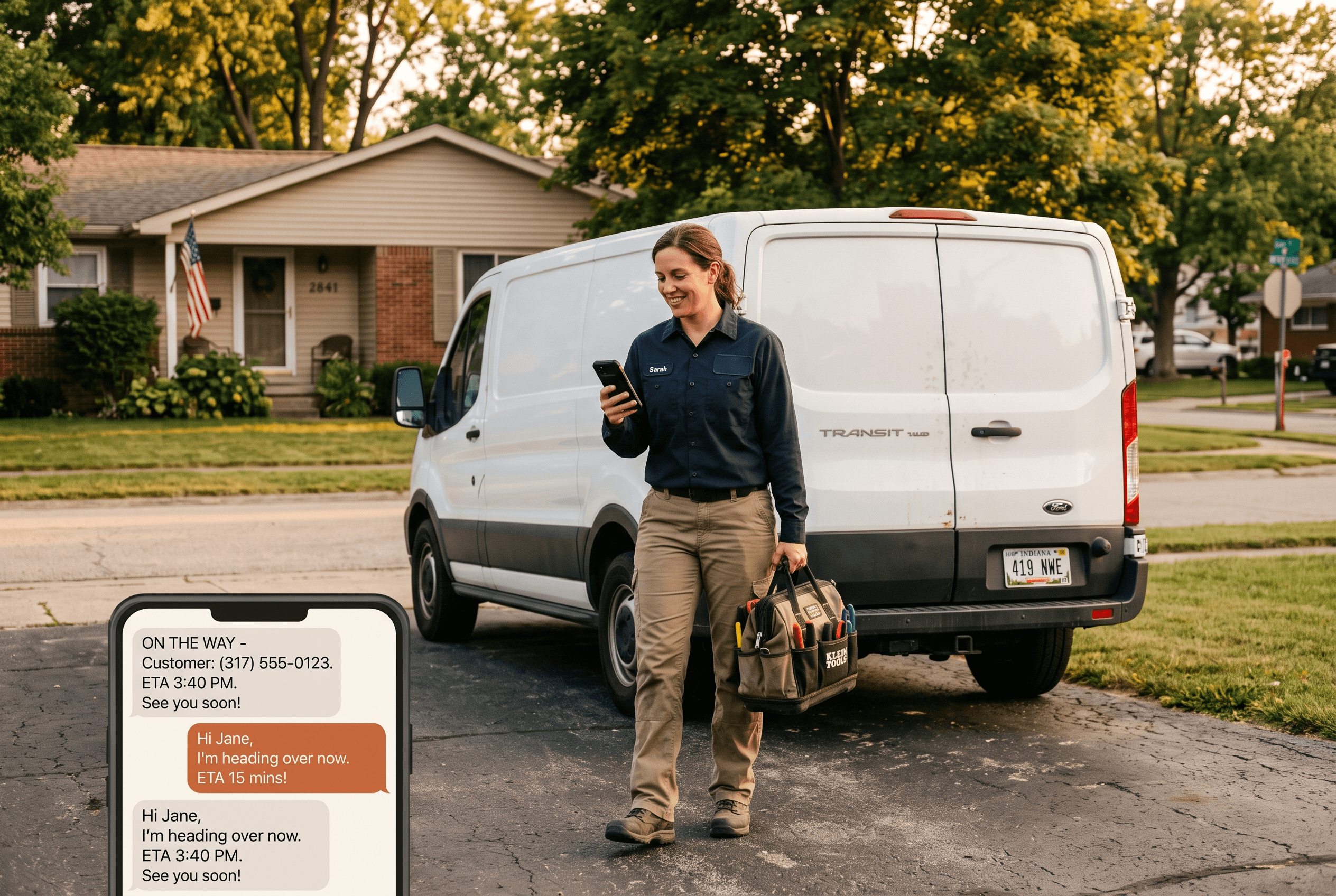
For a Fort Wayne HVAC or plumbing shop, the winner is dispatch: a “your technician, Dave, is about 20 minutes out” text cuts the missed appointments and callbacks that eat a dispatcher’s afternoon. Pair it with a same-day review-request text and you improve operations and reputation from one channel.
For a dental office, salon, or medical practice off Dupont or in Auburn, automated reminders with a simple “reply C to confirm” are the clearest ROI story in texting — every filled chair is a no-show avoided. That’s a textbook business-automation win, and consent handling matters more here given patient communication rules.
For a downtown restaurant near Parkview Field, one opted-in “tonight’s special” text to regulars can rescue a slow Tuesday, and waitlist texts keep the door moving on a busy Friday. The through-line across all three: text the people who asked, keep it timely and useful, and let the highest-open channel you own do quiet, steady work.
Set Up Texting the Right Way — Once
Text marketing is one of the few channels where the setup, not the running, is the hard part — the registration, the opt-in flow, the Terms of Service language, and the automation behind the reminders. Get those right once and it largely runs itself. That’s the work we handle through our digital marketing services and business automation services: compliant 10DLC registration, a platform matched to your volume, and reminder or review-request flows wired into how you already work. And if texting isn’t a fit yet, we’ll tell you plainly — no channel is worth paying for if your customers won’t opt in. Reach out and we’ll give you a straight read on whether texting earns its place, and what it would actually cost.
Fort Wayne AI Agency service
Business Automation
Workflow and process automation that gives Fort Wayne businesses their week back.
Learn moreFrequently Asked Questions
How much does it cost to text customers for a small business in 2026?
Expect three costs: roughly $0.007 to $0.03 per message segment, a texting platform starting around $10–$20 a month, and a one-time A2P 10DLC registration of about $4 plus $10–$15 per campaign and roughly $10 a month after that. For a modest local program, that often totals around $30–$50 a month all-in, most of it the platform and registration rather than the messages.
Do I have to register to text my customers?
Yes. Since February 2025, US carriers block business texts sent from unregistered numbers, so texting customers from a personal cell phone no longer reaches them reliably. You need A2P 10DLC registration, which requires an EIN, a live website with a published Terms of Service and Privacy Policy, sample messages, and proof that customers opted in. The fees are modest, but skipping registration means your texts simply don’t get delivered.
Is SMS or email better for a Fort Wayne small business?
Both, for different jobs. Text has about a 98% open rate and is read within minutes, so it’s best for time-sensitive, transactional messages like appointment reminders and “on the way” alerts. Email is cheaper and better for longer content, newsletters, and detailed receipts. Use text for the urgent 20% of your communication and email for everything else, and avoid blasting long promotional texts, which drives opt-outs fast.
What is RCS and does my business need it?
RCS (Rich Communication Services) is the upgraded, verified-and-branded version of texting that adds your business name, logo, images, and tappable buttons, and it became default on iPhone and Android after Apple added support in late 2024. A branded message reads as more trustworthy, but it isn’t urgent — most small-business texting platforms are still rolling it out, and plain SMS still handles reminders and alerts perfectly well.
Can I buy a list of phone numbers and text them?
No — this is the fastest way to get into legal trouble. Texting people who never opted in violates the federal TCPA and can carry significant penalties, and it’s the opposite of what carrier registration requires. Only text customers who gave clear consent — at checkout, during booking, or through a written opt-in. Consent isn’t just a compliance box; opted-in customers are the ones who actually engage.
Sources & Further Reading
- Omnisend: omnisend.com/blog/sms-marketing-pricing · SMS Marketing Pricing: How Much Does It Cost in 2026? (2026)
- TextBolt: textbolt.com/blog/10dlc-compliance · A2P 10DLC Compliance: Registration, Fees, and Enforcement (2026)
- Messente: messente.com/blog/state-of-rcs-business-messaging · The State of RCS Business Messaging (2026)
- Sender: sender.net/blog/sms-open-rates · SMS Marketing Open Rate Statistics (2026) (2026)
Put this to work in your business
Want help with this in your business?
Tell us what you're working on — a real person in Fort Wayne replies within one business day.