Did Google’s August 2026 Update Hurt My Fort Wayne Rankings?
Google’s August 2026 spam update finished rolling out Aug 21. Here’s the 10-minute way to tell whether it hit your Fort Wayne business — or whether it was something else entirely.

If your phone got quieter the week of August 18 and your Map Pack position looked shaky, you’ve probably already heard the explanation making the rounds at every Fort Wayne coffee shop and contractor’s yard: “Google did an update.” That part is true. Google confirmed an August 2026 spam update that started rolling out on August 18 and finished on August 21. But the leap most owners make next — “the update tanked my rankings” — is usually wrong, and acting on the wrong diagnosis wastes weeks.
A spam update is not a general shuffle of everyone’s rankings. It’s a targeted tool aimed at sites that break specific rules, and it rarely has anything to do with a legitimate HVAC shop, dental office, or restaurant in Allen County. So before you panic, rewrite your homepage, or fire your marketing help, spend ten minutes telling the difference between three very different problems that all feel identical from the owner’s chair. This is the honest diagnostic.
What exactly was the August 2026 Google update?
Google ran a spam update — its third of 2026, after ones in March and June. According to Search Engine Journal’s reporting, it began at roughly 9:27 a.m. Pacific on August 18 and finished at about 1:49 a.m. Pacific on August 21 — a run of about two days and sixteen hours.1 Search Engine Roundtable confirmed the completion on the 21st and noted this was the first confirmed ranking update of any kind since the June spam update wrapped on June 26.2 Google didn’t publish a blog post to accompany it; the announcement lived on the Search Status Dashboard, and Google added no new spam policy types — it applied its existing rules, globally and across every language.
Here’s the part that matters for a local owner: a spam update is narrow by design. Google’s own spam policies name the behaviors these updates go after — scaled content abuse (mass-produced pages made to game rankings), cloaking, doorway pages, expired-domain abuse, hacked content, and scraped content.4 As Keywords Everywhere’s breakdown notes, this update explicitly did not target link spam or site reputation abuse, and Google declined to say which queries or how many sites were affected.3 If none of those spam behaviors describe your website — and for the vast majority of Fort Wayne trades, dental, and restaurant sites, none of them do — this update was probably never pointed at you.
| The August 2026 spam update | Detail |
|---|---|
| Rollout window | Aug 18, 2026 (~9:27 a.m. PT) → Aug 21, 2026 (~1:49 a.m. PT) |
| Duration | About 2 days, 16 hours |
| Scope | Global, all languages |
| New policies added | None |
| Targets | Scaled content abuse, cloaking, doorways, expired-domain abuse, hacked/scraped content |
| Does not target | Link spam, site reputation abuse |

Did the spam update actually hurt my Fort Wayne business?
Almost certainly not — and it’s worth being blunt about why, because the “Google update hurt me” story is comforting in a way that keeps owners from finding the real problem. Spam policies are written to catch sites that manufacture content or manipulate signals at scale. A local plumber with a normal six-page website, real photos, and honest service-area pages simply isn’t the profile these systems flag. When legitimate small sites do get caught in a spam update, it’s usually because something on the site accidentally looks spammy — thin auto-generated location pages, a hacked plugin injecting hidden content, or a batch of AI-spun blog posts published to “feed the algorithm.” If you haven’t done any of that, the update is a weak suspect.
The stronger suspects are two things that have nothing to do with the spam update but happened to be visible the same week. The first is AI Overviews — Google’s AI increasingly answers the customer’s question directly, so the searcher never scrolls to the local results or clicks your site at all. That’s the shift behind zero-click search, and it can look exactly like a ranking drop in your traffic numbers even though your position never moved — the AI layer is reading a different set of signals than the ten blue links you’re used to watching.
The second suspect is your Google Business Profile. A profile suspension, a merged or duplicate listing, a quietly reverted category, or a review-display glitch can knock your Map Pack calls flat overnight — and owners routinely blame “an update” for what is really a listing problem. We’ve seen the same confusion play out when Google reviews suddenly disappear. The point isn’t that you’re imagining the drop; it’s that the cause is usually fixable and local, not a global algorithm change you can’t touch.
How do I tell if it was the update, AI Overviews, or my listing?
Ten minutes, three checks, in this order. Don’t change anything until you’ve done all three.
- Check Google Search Console first. Open the Performance report and compare the two weeks before August 18 to the days after. If clicks fell but impressions held steady, your pages are still ranking — the clicks are being absorbed by AI Overviews or the tighter results layout, not lost to a demotion. If both impressions and clicks fell together on specific pages, that’s a real ranking change worth investigating. Search Console’s newer AI-visibility view helps here too; here’s how to check whether your business shows up in Google’s AI answers.
- Check your Google Business Profile. Sign in and look for a suspension notice, a “pending” or “disabled” status, a category that changed, or reviews that vanished. Search your own business name and a couple of “near me” terms in an incognito window and confirm you still appear in the Map Pack. Most overnight call drops for local businesses trace back to the profile, not to organic rankings — which is why the fundamentals behind ranking in the Fort Wayne Map Pack are where a local owner should look before anything else.
- Check whether it’s even a rankings problem. Pull up your calls, form fills, and booked jobs, not just traffic. If leads are steady but a vanity keyword slipped a spot, there may be nothing to fix. Tying the search numbers back to actual revenue is exactly what honest ROI reporting is for — it keeps you from spending two weeks chasing a ranking that was never making you money.
| What you see | Likely cause | What to do |
|---|---|---|
| Clicks down, impressions steady | AI Overviews / zero-click | Optimize for AI answers; don’t touch rankings |
| Both down on specific pages | Possible real ranking change | Audit those pages for spam-policy issues |
| Calls flat overnight, rankings fine | Google Business Profile issue | Check listing status, categories, reviews |
| Leads steady, one keyword slipped | Normal fluctuation | Usually nothing — verify revenue impact first |
What should I do if my rankings really did drop?
If you worked through all three checks and it is a genuine, spam-related demotion, be honest with yourself about the cause. Find and fix the actual violation — remove the mass-produced pages, clean up the hack, take down the scraped or AI-spun filler — because there’s no shortcut around it. Google’s guidance is that recovery from a spam update can take months, since its automated systems need to re-crawl and re-evaluate the site before they trust it again, and there is no reconsideration request for an algorithmic spam demotion the way there is for a manual penalty.3 You fix it, then you wait.
That slow-recovery reality is exactly why the diagnosis in the previous section matters so much. If you assume the spam update hit you and start gutting a clean website, you can spend a month “recovering” from a problem you never had — and possibly break pages that were working fine. The disciplined move is to change nothing until Search Console and your profile tell you what actually happened. When the cause turns out to be AI Overviews or a listing glitch — which for a normal Fort Wayne business it usually does — the fix is completely different and often much faster than “wait months for Google to forgive you.” Knowing which lane you’re in is the whole game, and it’s the backbone of the Fort Wayne digital marketing playbook we point local owners to.
What this means for a Fort Wayne business
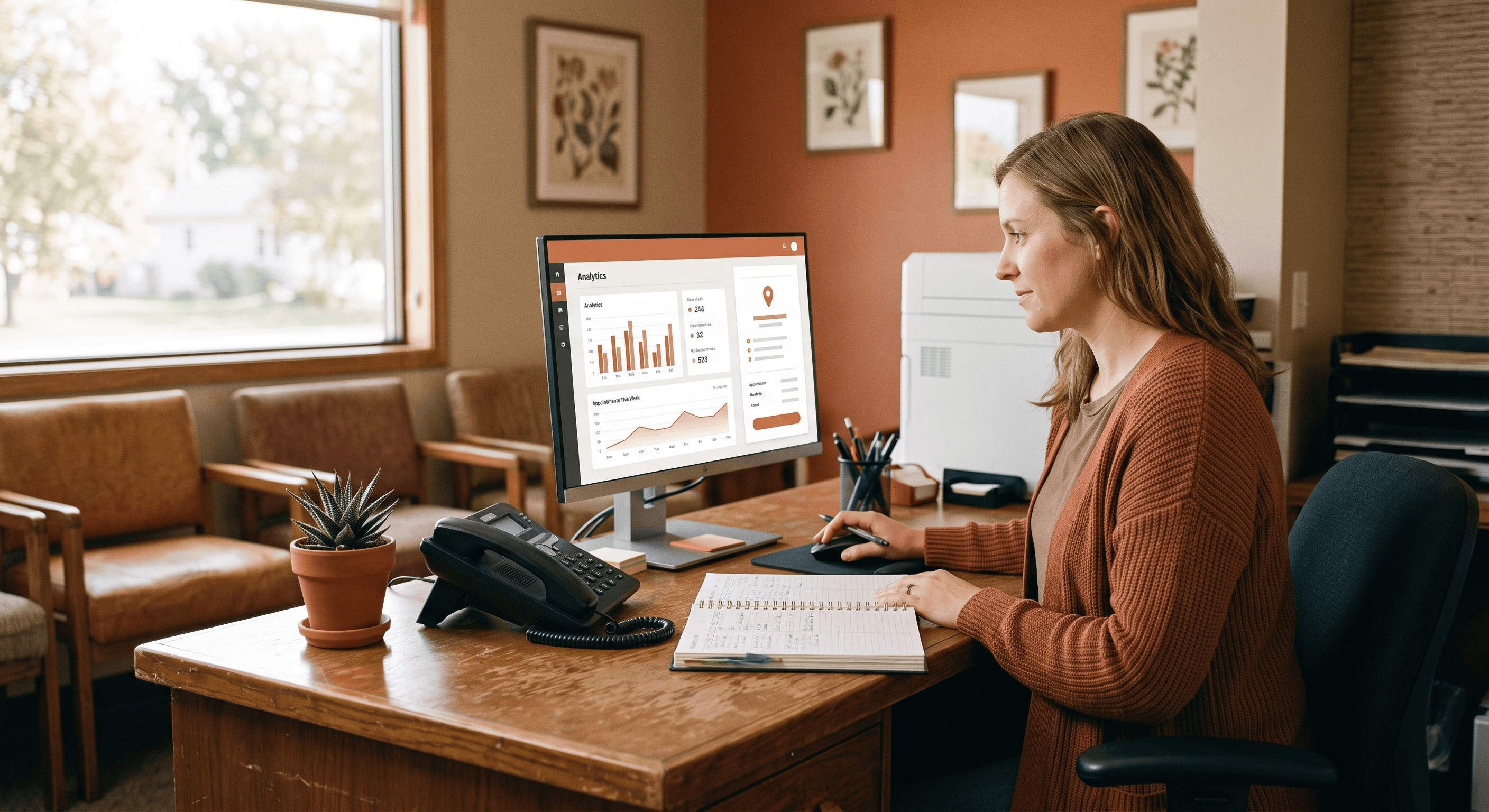
Picture two Allen County HVAC companies that both saw calls dip the week of August 18. The first one assumes “the Google update got us,” rewrites its homepage, and pauses its ads in a panic — and three weeks later nothing has improved, because rankings were never the problem. The second one spends ten minutes in Search Console, notices impressions were flat while clicks fell, checks its Google Business Profile, finds a duplicate listing a former employee created, merges it, and has its Map Pack calls back within days. Same symptom, wildly different outcome — decided entirely by whether the owner diagnosed before reacting.
That’s the local takeaway. For a Fort Wayne, New Haven, Auburn, or DeKalb County business, a “Google update” scare is a good prompt to actually look at your numbers — but a spam update is the least likely explanation for a legitimate local shop. The far more common Northeast Indiana story is AI answers eating clicks or a Business Profile that needs attention. Run the three checks, find the real cause, and fix that. The businesses that stay steady through every update aren’t the ones that react fastest; they’re the ones that keep their site clean, their listing accurate, and their eyes on booked jobs instead of headline panic.
Want a straight answer on what actually happened to your rankings?
A ranking scare is one of the few times “wait and see” is genuinely the wrong move — but so is tearing your site apart on a guess. If your Fort Wayne business saw a dip around the August 2026 update and you’d rather know than worry, we’ll run the diagnostic for you: pull your Search Console data, check your Google Business Profile, and tell you plainly whether it was the spam update, AI Overviews, a listing problem, or normal noise. Our SEO work fixes the causes that are real and, just as often, talks owners out of expensive changes they don’t need. Get in touch and we’ll give you the honest read before you touch a thing.
Fort Wayne AI Agency service
SEO Services
Dominate traditional search and AI-powered answer engines.
Learn moreFrequently Asked Questions
When did the Google August 2026 spam update roll out?
Google’s August 2026 spam update started rolling out on August 18, 2026 at around 9:27 a.m. Pacific and finished on August 21, 2026 at about 1:49 a.m. Pacific — a run of roughly two days and sixteen hours. It applied globally and across all languages, and Google added no new spam policy types.
Will the spam update hurt my Fort Wayne small business rankings?
Almost certainly not, if you run a normal local business website. Spam updates target sites that break specific rules — scaled or AI-mass-produced content, cloaking, doorway pages, expired-domain abuse, hacked or scraped content. A legitimate Fort Wayne HVAC, dental, or restaurant site that hasn’t done any of that is not the profile these updates flag.
Why did my Google rankings or calls drop in August 2026 then?
For a legitimate local business, the more likely causes are AI Overviews answering the customer directly (so they never click your site) or a Google Business Profile problem such as a suspension, duplicate listing, or category change. Check Google Search Console and your profile before assuming the spam update caused it.
How long does it take to recover from a Google spam update?
Google says recovery can take months, because its automated systems need time to re-crawl and re-evaluate your site after you fix the underlying spam issue. There’s no reconsideration request for an algorithmic spam demotion, so you correct the violation and wait — which is exactly why diagnosing the real cause first matters so much.
How do I tell if it was the update, AI Overviews, or my listing?
Run three checks in ten minutes: compare clicks vs. impressions in Google Search Console (clicks down but impressions steady points to AI Overviews, not a demotion); check your Google Business Profile for suspensions, duplicates, or category changes; and look at actual calls and booked jobs rather than traffic alone. The pattern you see tells you which of the three problems you actually have.
Sources & Further Reading
- Search Engine Journal: searchenginejournal.com/google-begins-rolling-out-the-august-2026-spam-update/586301 · Google Finishes Rolling Out The August 2026 Spam Update (August 21, 2026)
- Search Engine Roundtable: seroundtable.com/google-august-2026-spam-update-done-41906.html · Google August 2026 Spam Update Is Done Rolling Out (Barry Schwartz, August 21, 2026)
- Keywords Everywhere: keywordseverywhere.com/news/google-algorithm-updates/august-2026-spam-update · August 2026 Spam Update: Dates, What It Targets & Recovery (August 21, 2026)
- Google Search Central: developers.google.com/search/docs/essentials/spam-policies · Spam Policies for Google Web Search
Put this to work in your business
Want help with this in your business?
Tell us what you're working on — a real person in Fort Wayne replies within one business day.